The Logic of a Market Stall
Read a produce stall from the walking aisle to the crates underneath, and see how a morning's trade shapes what you buy.
9 min read
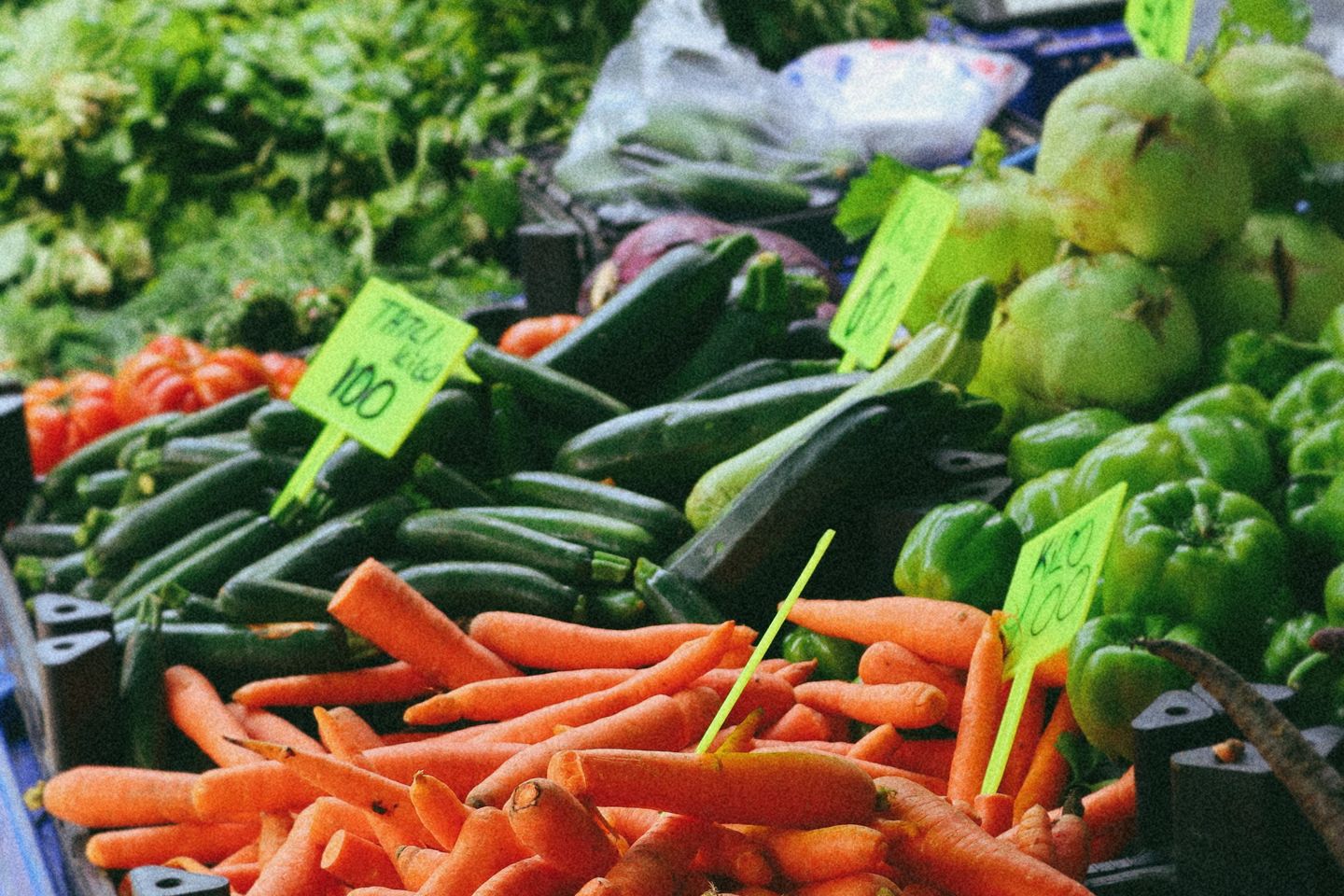
From the middle of a market aisle, a produce stall can look like a single continuous surface. From the seller's side, it is a set of decisions about weight, time and reach. Someone must lift the full crate onto the table, find room for the scale, answer a question about pears and accept payment, all without blocking the next person who wants to buy a bunch of herbs. What appears to the shopper as a wall of color is also a working surface with a route through it.
You can learn to read that surface without trying to deduce a farm's entire story from the shape of a carrot. Stand where you are out of the way and look at which hands go where. Notice what the seller replaces in small quantities and what stays stacked throughout your visit. Watch the space around the scale. A display makes more sense when you read it as something being used.
What the front edge has to do
The front edge of a stall has two jobs that regularly conflict. It has to catch the eye of a person in motion, and it has to give someone a clear place to stop. A wide band of red fruit can be seen from across an aisle. A row of large crates with no breaks can leave a shopper wondering where to stand or how to point to an item. A gap near the center may be the practical heart of the stall. It can be the spot where someone sets down a basket, weighs a bag or picks up change.
In a narrow aisle, that gap influences the conversation. If you have several questions about unfamiliar vegetables, leave the open space for people placing orders while you look over the labels. When you are ready, step forward with a specific question. Asking which of two greens holds its texture in soup is easier to answer during a rush than asking the seller to explain the entire table. If the stall uses numbers or a visible queue, join it before reaching for produce.
Display height matters too. A small bundle set on top of a turned crate comes into view without taking up much space. A box of heavy squash often makes more sense low down, where it can be lifted with both hands. A shopper who sees small, bright things at eye level and dull, bulky things near the floor might read that order as a hierarchy of quality. It can simply reflect what fits and what is easy to move.
The stack and the reserve
The visible quantity of a product and the quantity the seller brought are two different things. Some produce tolerates a generous stack. Small potatoes are sturdy enough to be sold from a deep bin, assuming the weight of the bin suits the table. Soft fruit can bruise under a high pile, so a seller may keep a shallow layer on view and replenish it from a box in the shade. What looks scarce at nine in the morning may be the top layer of a careful system.
Other times, the small group you see really is the last of a delivery. Even then, it helps to ask when it arrived or how the remaining pieces are best used. The final few peaches might have been handled several times by shoppers looking for a particular degree of firmness. They might also be small fruit from a fresh box that shoppers passed over for larger pieces. Size is a buying preference in one kitchen and an advantage in another. Small fruit fits neatly into a lunch bag, and small potatoes may need no cutting before roasting.
Freshness can show up in one part of a plant before another. The cut end of a leafy bunch may start to dry while the leaves are still usable. A cabbage sold with protective outer leaves can look scruffier than one trimmed for display. Visual clues are good reasons to ask a question. Smell, texture and the condition of the pieces that will actually go into dinner tell you more about how soon you should use them. Follow the seller's instructions about handling. You can describe the ripeness you want without pressing fruit that somebody else may take home.
A price card belongs to a unit
Two neighboring cards can show the same number and refer to entirely different purchases. One may be the price per bunch, another the price for a unit of weight. A carton, basket or tied bundle might be the selling unit even if you can count all the items inside. Before comparing two stalls, check the unit and consider how much of the purchase your household will use. A generous bunch of dill is useful when you are making salad for a group. The same bunch can be expensive for a single plate if most of it ends up wilted in the fridge.
Weight can also conceal useful differences. Two pounds of small carrots and two pounds of large carrots serve roughly the same number of people, but the small ones may require more individual handling. If they are clean and tender enough to use with the skin on, the difference in preparation time can go the other way. Turnips with greens attached offer another example. When the greens are in good condition and you plan to cook them, the purchase can yield two dishes. If you only want the roots, consider how much of the purchase is attached leaf and stem.
Discounted produce sometimes comes with a specific use in mind. A tray of ripe plums can be right for compote that evening. Buying the tray for lunches later in the week may produce a bowl of leaking fruit by Wednesday. Check for spoilage and set aside time to use sound fruit promptly. A discount buys you a shorter window, an irregular shape or a larger quantity. The bargain depends on whether your plans suit that particular trade.
What changes over a morning
An early visit is good for seeing the range a stall intended to offer. A later visit lets you see what moved. The missing items can reflect supply, weather, other shoppers' habits or a local event that brought people to market at the same time. One morning is a small sample. If you come back regularly, you may notice patterns that are actually useful, such as a small delivery of greens often selling through while sturdy vegetables remain until closing.
The seller's work also changes as the morning goes on. Early in the day, there may be time to explain the texture of two kinds of apple. During a rush, the same conversation competes with weighing, packing, replacing price signs and finding small change. Near closing, the seller has to consolidate crates and work out what goes back into the vehicle. Asking when a stall is usually quiet can get you better answers than assuming that the least crowded moment is also the easiest time to talk.
Weather changes the appearance of the stall before it changes the supply. Sun travels across a table. On a bright day, tender herbs may move behind the shade line, or a box of fruit may be covered between sales. Wind can send empty cartons and price cards across the aisle, so a display might get lower and tighter as the morning goes on. An awning can make the stall look darker, while the produce beneath it is better protected from direct sun. Look past the lighting before judging the condition of the greens.
Seasonality is easier to notice in groups
A single label can tell you a farm name, a growing region or a variety. The combination of products on the table tells you about the transition between weeks. The first small basket of a new crop may sit beside a larger supply of the preceding crop. Later, the balance reverses. This makes a regular walk through the same market a better way to learn its calendar than trying to memorize a season chart that was written for somewhere else.
Questions about origin deserve precise answers. A seller may be the grower, a worker from the farm, or a trader sourcing from several places, depending on the market's rules and the business. Ask where a particular item was grown, or whether the stall sells produce from several farms. If you need a specific standard, such as a particular certification, ask for that information directly. Display materials, the seller's accent and the presence of soil on the roots tell you very little about it.
You can buy around changes in the table rather than planning around one promised ingredient. Suppose you want to make a salad with crisp, lightly sweet vegetables. If the snap peas are gone, the right swap depends on which part of their role you want to keep. Thin slices of kohlrabi bring crunch. Radishes bring crunch and heat. A young cucumber adds moisture, so the dressing may need to be sharper and go on at the last minute. Use the stall to choose among functions, then make a small adjustment in the kitchen.
Give your own basket a route
The stall has a sequence from reserve crate to display to scale. Give your bag a sequence as well. Walk once through the nearby stalls before buying anything delicate. Start with items that can go on the bottom, such as onions or potatoes, then add items that need less pressure. Carry fragile fruit separately if the trip home will be long or crowded. Ask the seller to keep a soft item out of a bag with hard vegetables if it would be awkward to repack at the table.
Choose one immediate meal and one later meal. For the first, buy the item that looks ready today and build the rest of the meal around it. For the second, choose produce that can wait and that can take over if your plans change. Leafy greens might be tonight's main event while a cabbage can sit in the fridge until another evening. A small bunch of herbs can finish both meals if you decide how to use it before you buy. Planning in this order leaves room for what the market has and keeps the more fragile purchase from becoming a chore.
After paying, check that the space is clear for whoever is next. Move aside to distribute the weight in your bags or read the slip. As you leave, look back once at the section you bought from. Perhaps the seller has filled the gap with a few more pears, or shifted the signs to make room for something else. The arrangement is already changing. Next week you will arrive with an idea of where to look, what to ask and which parts of the display were there only for that morning.