Onions Worth Waiting For
Follow a yellow onion from its first hiss to a soft brown tangle, and decide which stage belongs in your dinner.
8 min read
The pan that smells of raw onion and the pan that smells of onion soup can contain the same two onions, the same oil, and no added sugar. The time between those smells is full of useful stopping places. An onion softened only until translucent can quietly flavor a pot of beans. Slices browned around the edges still offer some structure in a sandwich. A pile cooked until nearly every piece is brown has enough sweetness to season a flatbread with very little else.
Think first about where the onion will go. If it will spend an hour in a stew, a few minutes in the skillet can be enough to remove its raw edge. If it is the main thing on a piece of bread, leave more time to cook down. Either way, two ordinary yellow onions make enough to see how the color moves across the pan without filling it so high that the pieces sit in their own steam all evening.
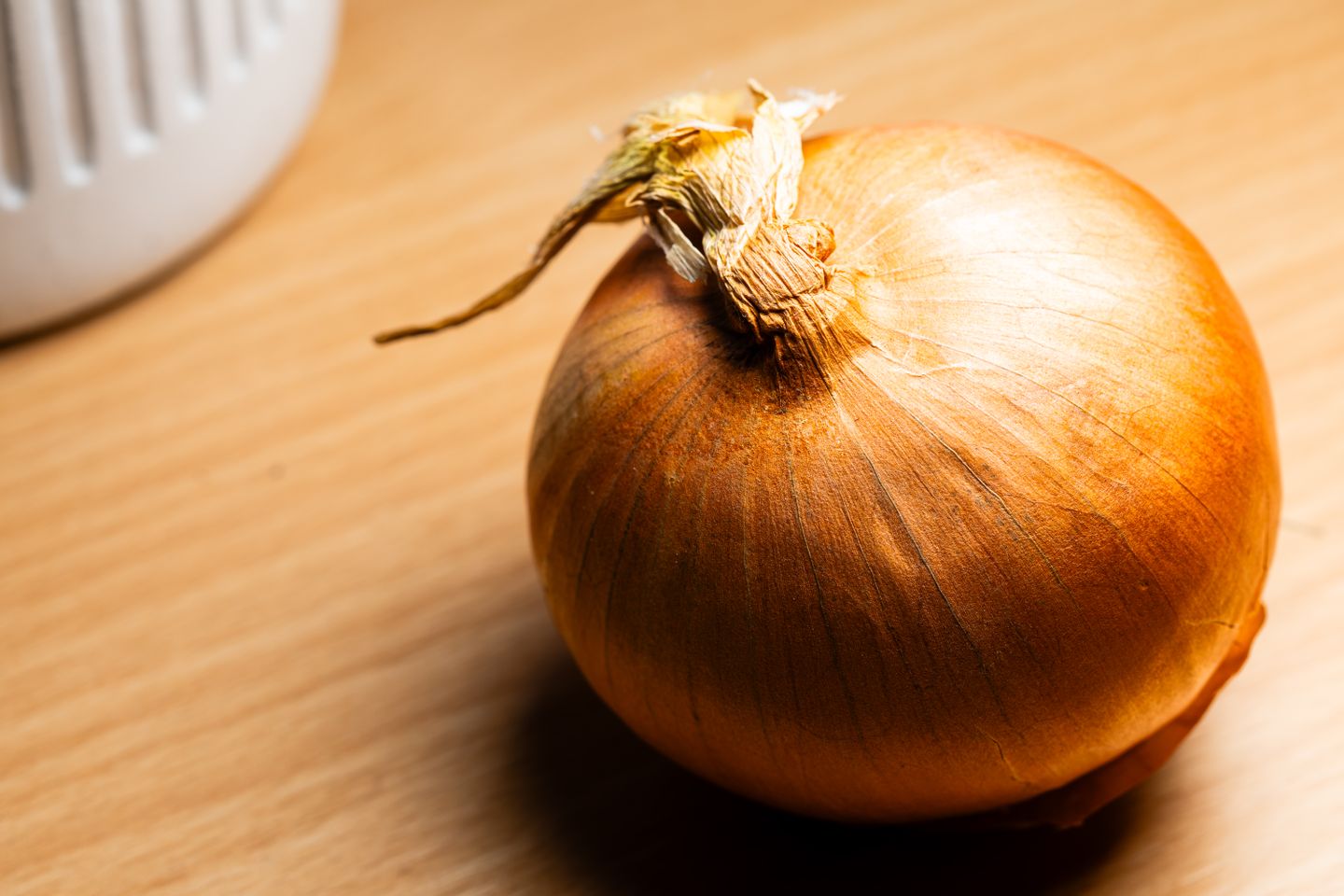
Choose dry onions with solid shoulders
Pick bulbs that feel hard under their skins and have a dry neck. A thin layer of loose papery skin is fine. Leave behind onions with a wet neck, a soft area beneath the outer layer, or a smell that suggests decay. Larger bulbs save a little peeling time. Smaller ones are useful if you make many dishes that call for one onion but seldom need a very big one. Keep whole onions dry, cool, and well ventilated. A mesh bag makes it easier to see and remove a bulb that starts to deteriorate.
For slow cooking, trim the top of each onion and divide it through the root so the halves lie flat. Peel away the dry skin. Slice in the direction from the root toward the top if you want longer pieces that hold some of their shape. If you want shorter, softer lengths for a sauce or filling, turn the half to cut across that direction. Use slices around three to five millimeters thick. Very thin slices at one end of the board can darken well ahead of thicker pieces from the other end.
For a dish that starts with chopped onion, make a few lengthwise cuts toward the root without cutting through it, then slice across. The root end will hold the remaining piece together. Stop before the piece becomes too small to hold comfortably. Set that last bit flat and cut it separately. Refrigerate cut onion in a covered container if it will not go straight into the pan. Its odor can otherwise reach a lot of other food before dinner does.
Listen for the end of the first hiss
Put a broad, heavy skillet over medium heat. Warm about a tablespoon of neutral oil or olive oil and add the slices from two medium onions, about 350 to 450 grams after trimming. Stir once so the pieces are lightly coated. Give them a small pinch of salt. If you can hear a strong hiss that fades after a moment, the onions are releasing moisture into a warm pan. If there is a hard sputter and the thinnest pieces darken immediately, turn the heat down and move the onions around.
The first several minutes are about softening. A good bit of steam will rise. Separate any nested slices with the edge of the spoon and let the larger pieces touch the pan. You will see thin sections go translucent first. After around eight minutes, one of them should bend easily when lifted. A thicker piece may still feel firm. To make the base for soup, wait until those thicker pieces have softened at the edges, then add the other ingredients.
If the pan becomes dry before the onion softens, lower the heat and add a teaspoon or two of water. It will spread quickly and release any pale residue at the bottom. Avoid pouring in a large amount unless you intend to cook the onion in liquid. A shallow film can give a few stubborn slices time to soften. A puddle will hold the pan at a slow steam until it evaporates, putting any browning on hold.
Take a spoonful out at the golden stage
Keep cooking over medium-low heat for slices you want to use in a sandwich or a warm salad. Stir enough to change which pieces touch the surface, especially if your burner heats one side more strongly. Let the onions stay still for a minute or two between passes when there is no sign of burning. Look for individual brown edges and a pale gold body. The color may take another ten to twenty minutes, depending on your pan and how much the onions have shrunk.
Put a teaspoonful on a plate and let it cool briefly. A golden slice is sweeter than a translucent one and still takes a little chewing. Lay a few of those slices over sharp cheese or on toast with a spoonful of cooked beans. They can also go into a grain bowl, where long strands are best cut into a few shorter pieces before serving. If you like the balance at that stage, you can stop even while a deeper brown is possible.
A crowded pan can make this middle stage last a long time. If you doubled the quantity, divide the softened onions between two pans when you want visible color. The new pan should already be warm. You can also cook a big batch in a wide pot, stirring up the corners so all the pieces have a turn against the bottom. Piling more raw onion on top just as the first pieces go golden restarts the work of driving off moisture.
Give the darker stage a wide margin
For deeper onions, keep the heat low enough that a streak of color stays brown when you draw the spoon through it. When the pan collects a tan glaze, add a small spoonful of water and scrape gently. Let the liquid disappear, then give the bottom time to color again. Repeating that process spreads some of the browned flavor through the whole pan. If the residue has turned black and smells bitter, move the onions that still taste sound to a clean pan instead of stirring the scorched part back in.
Start looking for a soft, dark golden pile after about forty minutes total, allowing more time when the pan is full. The onions may cook down to a fraction of their first volume. A spoonful can hold together loosely without being dry. Taste a cooled strand. It should have some sweetness and a deeper cooked flavor. If it seems cloying in the dish where it is going, add a tiny splash of mild vinegar toward the end and let the sharpest smell cook away.
These onions are useful in small doses. Stir them into a pot of broth for a fast soup base, tuck a line of them under cheese in a sandwich, or set a few strands on a baked potato. For flatbread, spread a thin layer and keep some areas bare so the dough underneath can brown. A wet mound at the center can stay heavy while the crust around it cooks. Let hot onions cool a little before putting them on dough or a delicate sheet of pastry.
Make one pan serve two meals
When there are enough brown onions for only a little of each use, start with the dish where the onions will be most visible. Lay a few strands across a thick slice of bread and taste them before adding the cheese. If they already provide enough sweetness, a sharp cheese or a few greens will do more than an extra spoonful of onions. Scrape the rest into the soup, where even the smallest pieces will add some flavor to the broth.
If two textures sound useful, spoon half the onions out while they are gold at the edges. Spread the rest in the pan and continue cooking. With less in the pan, they will lose moisture faster, so lower the heat or shorten the time between checks. The two portions can go into different dishes. Use the first pile in a salad with beans and a little vinegar and the second on toast or in soup. You get a clearer picture of what the pan did by eating them on the same day.
Refrigerate cooked onions promptly in a shallow container if you are keeping them. Label the darker batch if you freeze some in small portions. A tablespoon thawed into a pan can season a single bowl of broth. Use refrigerated leftovers within three to four days and reheat them thoroughly. The fully cooked onions can take a few minutes on a low burner with a splash of water, which helps loosen the strands without scorching the sugar at the edges.
Keep one ordinary onion for the next pot of soup. If you want to test a cut, give half the onion long slices and chop the other half, then cook them separately to the same color. The pieces behave differently even when both taste sweet. A good soup can use the chopped half, while a sandwich can benefit from the strands. By the time dinner is served, the choice you made at the cutting board will be as apparent as the extra ten minutes you gave the pan.