Buying Tomatoes by Touch
How to choose a tomato for the meal you actually plan to cook, from a soft salad slicer to a firm fruit for the end of the week.
8 min read
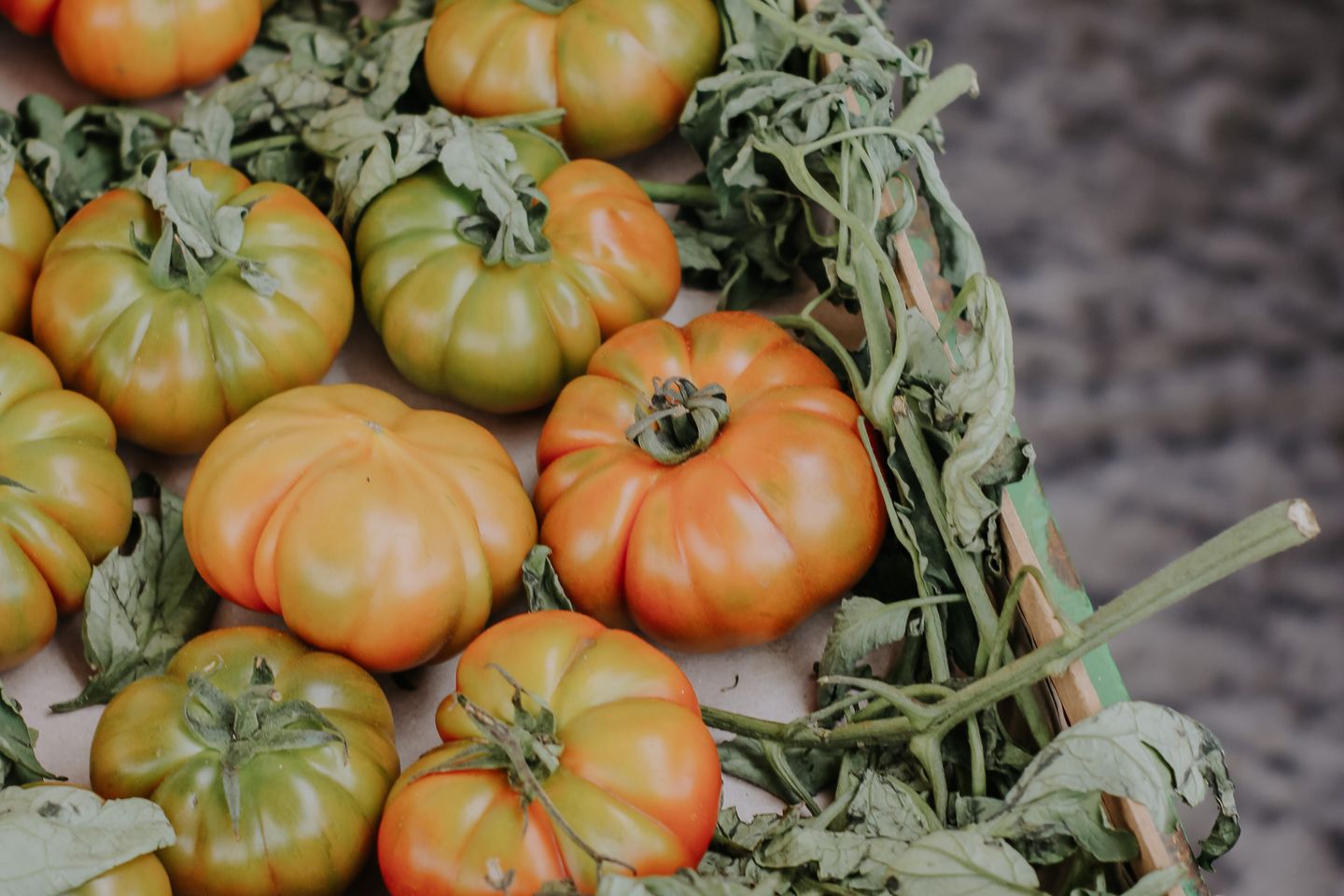
At a produce stall, there is often a small pile of tomatoes to the side of the main display. They may have a flattened shoulder or an old, dry scar across the base. Sometimes they have been pulled aside because they are exactly ready to eat and won't stay that way on the trip home in a crowded bag. If you are making lunch in an hour, these can be worth asking about before you reach for the picture-perfect basket.
Ask before handling fruit if the stall has signs requesting it or the seller is packing orders. When you do pick one up, use the palm of your hand to support it, turn it once, and put it back gently if you pass. A bruise can begin under a perfectly fine looking skin. You only need enough contact to feel whether the tomato is substantial for its size and whether there is any slight give at the sides.
Bring dinner to mind first
The tomato for a sandwich has a specific job. It needs to slice without collapsing, and its cut flesh should taste good with nothing more than bread and salt. Choose a fruit that feels full in the hand and yields a little under very light pressure, particularly beside the shoulder. A broad, flat tomato makes generous slices. The very soft ones are better carried home for toast, where they can be rubbed directly into the bread and their juices are an advantage.
A tomato for the roasting pan can have a different texture. Plum types often have a thicker wall of flesh and less loose gel, so they hold recognizable shapes after a spell in the oven. Sweet little cherry tomatoes go the other way: their skins pucker and burst, leaving a glossy puddle that is good spooned over white beans. Larger, juicy fruit is fine for roasting if you choose a dish with a rim and give the liquid somewhere to go. Halve a few, set them cut side up, and judge whether you want them merely tender or concentrated enough to spread on toast.
For a picnic salad that will be dressed later, choose tomatoes with a slightly firmer feel. Small tomatoes can travel whole in a shallow box, with the dressing in a separate jar. If the lunch will be a room-temperature plate at home, pick the ripest slicer you can comfortably carry. There is less need to trade flavor for durability when the last leg of the journey is a walk from the counter to the cutting board.
What you can learn without squeezing
Weight is useful when comparing two fruit of similar size and kind. A tomato that feels surprisingly light beside the rest may have more space between its seed chambers. Some varieties are built that way, which can be useful for stuffing. If you are shopping for a juicy eating tomato, choose the one with a heavier feel and smooth, well-filled sides. A slight flattening under its own weight is fairly ordinary in a ripe fruit. A single soft patch surrounded by harder flesh deserves a closer look.
Look around the stem scar and along the blossom end, the small dot opposite the stem. Dry, closed scars are generally cosmetic. Split skin, leaking juice, wet depressions, and visible mold are reasons to leave a fruit behind. When one cracked tomato in a punnet has leaked across its neighbors, pick a different punnet. It is difficult to check the condition of wet fruit tucked behind a paper label.
Color becomes more helpful when you know the variety. A yellow tomato can be fully ripe while it still has green at the stem. A dark tomato may keep a dusky shoulder when its lower half is quite soft. A hard green fruit from a familiar red variety is a different proposition from a ripe green-striped variety. Ask the seller which one it is, or compare several specimens in the same basket. If the tomatoes are sold as a mix, a light touch and a look at the skin offer more useful clues than a single shade chart.
Give one a quick smell around the stem if the seller is comfortable with it. A warm fruit can carry a green, almost herbal scent, though a cool tomato or a less fragrant variety may smell of very little. Vine leaves can scent a whole cluster without saying much about the flesh. For a stand with samples, a taste of a cut piece tells you more about the balance of sweetness, acidity, and texture than a particularly fragrant stem.
Buy in order of use
A useful shopping pattern is to choose one for today, two or three firm ones for the next couple of days, and a separate handful of small tomatoes for lunches. This gives you a better chance of using every one than buying a big box of equally ripe fruit. Put soft tomatoes at the top of your bag or bring a rigid container. Carry them separately from bottles, jars, and the heel of a heavy loaf. A layer of paper can stop them rolling but offers little protection against weight.
At home, take the ripe fruit out of the bag and give it a bit of room. Put it in a single layer, somewhere out of direct sun and away from the stove. A bowl is convenient as long as the fruit doesn't stack high enough to hide the softest one. Check it each morning and move the ripest fruit to the front. If the kitchen is warm and a tomato is already at its best, refrigerate it when you need to gain another day or two. Let the portion you plan to eat come back toward room temperature before serving. A cold tomato can seem quiet even when the cut flesh tastes lively at a warmer temperature.
Wash whole tomatoes under running water just before you cut them. Dry them so they sit steadily on the board. Cover and refrigerate cut tomatoes promptly. If you have a lot of sound fruit ripening at once, roast it and chill the cooked batch promptly in a shallow container, or freeze it in meal-sized portions after cooling it safely. Those portions are good for soup or sauce when you are more interested in flavor than in keeping the texture of a fresh slice.
Match the cut to the fruit
For a slab of tomato on toast, turn a big round fruit onto its side and slice across it. That gives you rounds with the chambers arranged like spokes. A serrated knife can start the cut without flattening the tomato. Take one slice from near the center, taste it, and decide how much salt the rest needs. If you salt thick slices on a plate, give them a few minutes and drag the bread through the liquid they leave behind.
For a chunky salad, cut through the stem scar and use the halves as stable bases for wedges. They are easy to spear and hold their shape under a dressing with a little body. Any tiny fruit can be split in half, both to make it easier to eat and to expose a little flesh to the dressing. Add the tomatoes to a bowl with a spoonful of oil, taste, then add vinegar or lemon only if you want the extra sharpness. An especially tart batch may call for olive oil, a pinch of salt, and a piece of bread to soften each bite.
For a quick sauce, grate the cut side of a very ripe, sound tomato on the broad face of a box grater. Set the grater in a shallow bowl so the juice does not run off. Keep the skin between your palm and the holes and stop as soon as the skin is all that is left. The fresh pulp can go into a pan with oil and garlic for a fast pasta sauce. A few spare minutes of simmering will help if the tomato gives up a great deal of liquid.
Get a better comparison next time
Buy two different tomatoes from the same market and cut one slice of each. Give them the same pinch of salt. Compare how easily the knife enters the skin, whether the seeds sit in a loose or thick gel, and how much juice reaches the plate. The one that produces the prettiest slice may be mild. The one that looks a little ragged can be more flavorful and a better companion for plain rice or a slab of toast. The comparison is easiest with two tomatoes that have both had time to soften.
Repeat the exercise with a ripe and slightly firmer fruit of the same kind if you can. Taste the firmer one now and reserve its partner for a day or two if both are still firm. A written note can be short: rich flesh, lots of juice, thick skin, more tart than sweet. Include the seller or variety if you know it. The point is to connect what you felt in your hand to something you noticed over lunch. Next time a basket of the same kind turns up, you will have a practical memory to lean on.
A market at the beginning of a season may have only one variety and a handful of ripe examples. That is still enough to work with. Choose the soundest one for later and the ripest one you can eat today. Start with a cutting board and a piece of bread. By the time you have mopped up the juice, you will know whether you want to go back for the larger basket.