How to Soften a Leek
Slice a leek into thin arcs and sweat them gently for the sweet, nearly invisible base of a soup, sauce or filling.
8 min read
A sliced leek can begin as a high loose mound and end as a few spoonfuls of soft strands that almost disappear when they meet broth. The change is gradual. The rigid arcs relax, the wet shine changes and the scent becomes sweeter. A cook who is used to waiting for an onion to turn brown can miss the point at which the leek has done enough. For a pale soup or the base of a filling, you want tenderness and moisture with very little color.
This is a job for the pale part of a leek, cut small and cooked over gentle heat. It uses one pan and leaves room for whatever the softened pieces are going to support. The key choices come before the leek touches the stove. Wash between the layers, cut for the length of time you have and decide whether the pieces should keep some shape or give themselves almost entirely to the rest of the dish.
Wash the part you will use
Cut off the roots and separate the tough upper leaves from the pale stalk. There is no single line where the color changes, so inspect the leaves as you go. A tender pale green section can cook down with the white part. A fibrous strip that feels tough between your fingers may need another use. A leek that is large on top can have a shorter pale section than you expect. Measure or weigh after trimming if your recipe calls for a particular amount.
Slice the stalk in half lengthwise and spread the layers enough to rinse under running water. Pay particular attention where the leaves open out. Grit can sit between two layers even when the outside looks clean. If you have already cut the leek into arcs, rinse the sliced pieces in a bowl of clean water, move them gently to release dirt and lift them into a strainer so any grit can stay behind. Repeat if necessary. A little dirt can make an otherwise soft spoonful feel unpleasant, and there is no good way to remove it once the soup is finished.
Let the slices drain well before you cook them. A few drops of water are harmless in a gentle sweat. A handful dripping from the strainer can put more water in the pan than you planned, and you will have to wait for it to go before judging the texture. Shake the strainer gently over the sink. Spread the slices loosely on a clean towel if you need to remove more water, then pick them up without pressing them into a tight wet clump.
Cut a size that suits the rest of the dish
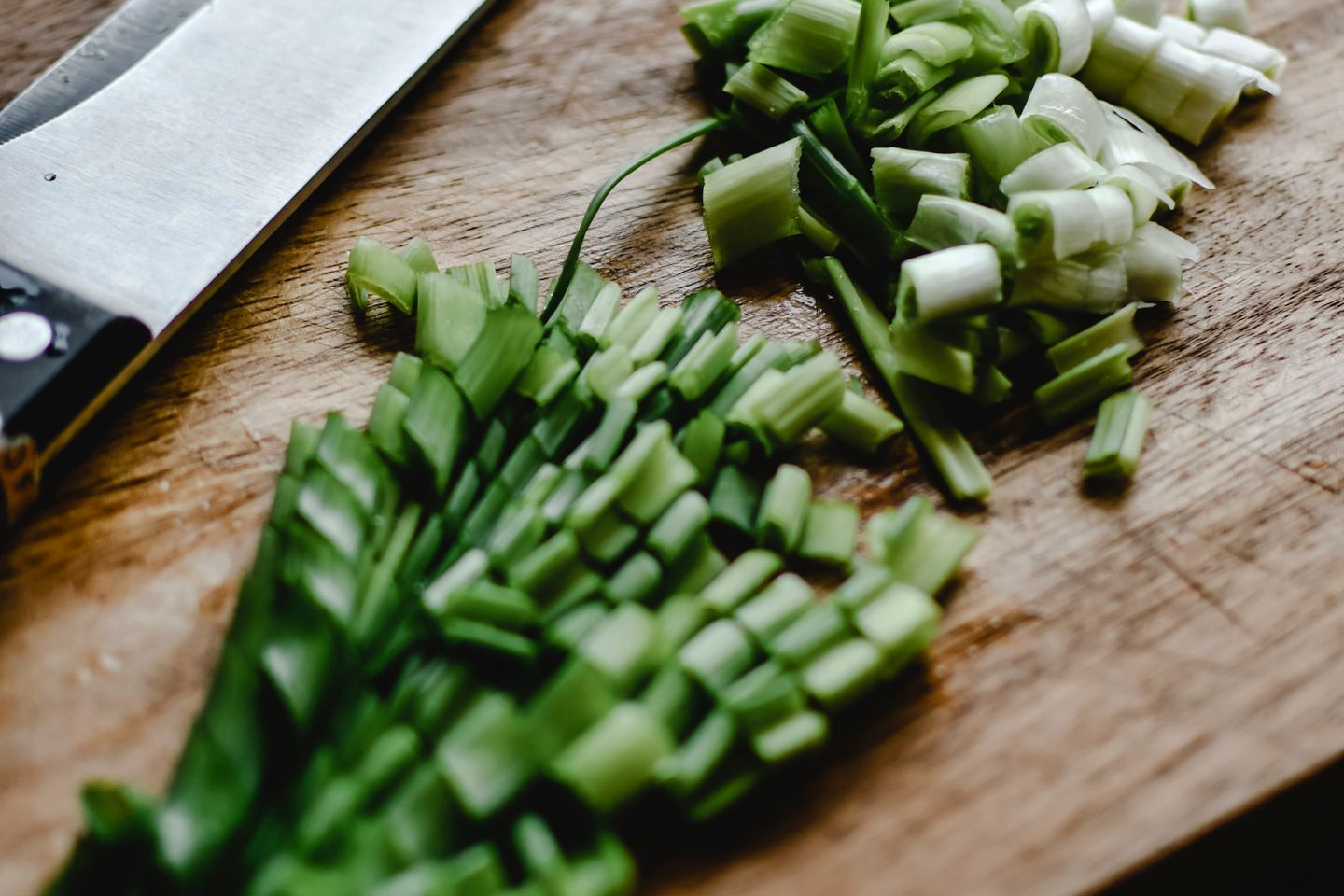
Set each half flat side down and cut across it into thin arcs. A few millimeters is a useful starting point, and the exact size depends on what you want them to do. Very fine arcs collapse quickly and work well when they will be blended into soup. Slightly thicker slices give a savory filling a soft strand that can still be seen. If you are adding them to a pan with chopped vegetables, cut the strands shorter where necessary so they can be picked up in the same bite.
Take a handful and separate some of the nested slices before they go into the pan. The outside arcs are wider and can curve around the pieces near the center. If you leave the slices tightly stacked, a few spots will heat and soften ahead of the rest. Lifting and loosening them as they go in gives the fat and steam a chance to reach more of the cut surfaces. It also lets you spot any layer with grit you missed while rinsing.
The pale and light green pieces need not be sorted for an ordinary soup. You can sort them when the dish needs an especially mild, pale base. Put the light green pieces aside for another use or start them a little earlier if they are firmer than the white. A leek with a large difference between the two parts may benefit from that small separation. If both feel tender, cooking them together saves time and gives a little more character to the final mixture.
Let moisture do the first part of the work
Warm a shallow pan over low to moderate heat. Add enough butter or oil to make a thin film. Butter can give a soft leek a round flavor. A neutral oil makes the leek itself easier to notice. Add the sliced leek and a small pinch of salt if the rest of the dish allows it. The first sound should be mild. If the fat crackles sharply and the thin edges begin to color immediately, lower the heat or take the pan off the burner briefly before continuing.
Turn the slices once so they are coated and spread them in a reasonably even layer. A lid can help hold moisture during the first few minutes, especially if the pan is broad and the layer of leek is thin. Check the pan regularly. If the pieces are still stiff and the surface is starting to dry, add a spoonful of water and let it steam briefly. If there is already a pool of liquid, leave the lid off for a while. Aim for enough moisture to give the slices time to soften without letting them sit in a deep puddle.
As the arcs relax, move the pieces from the outer edge into the center and stir gently. They become easier to cut with the edge of a spatula. Pick up one of the thicker pieces and let it cool enough to taste. It may be pliable but still have a strong raw note. Give it a little longer if that sharpness is going to compete with a delicate dish. When the strands can bend easily and taste mild, the base is ready even if its color has changed very little.
Finish wetter for soup and drier for a filling
If the leek is going into soup, a little moisture in the pan is usually welcome. Add the stock or the next ingredients when the thickest pieces are soft enough for the recipe. A soup that will simmer with potatoes may give the leek more time. A soup that will be blended after only a brief heat can benefit from waiting until the pieces are fully tender before adding the liquid. Taste a strand before you move on, especially if the outer sections were firmer.
For a savory filling, a wet pan can turn into a wet crust or a filling that will not hold in place. Remove the lid and allow the visible liquid to evaporate gently after the strands soften. Stir across the bottom and watch the track the spatula leaves. When the track stays clear for a moment, the pan may be dry enough. Remove it before the edges begin to catch. Cool or use the filling as your recipe directs, and account for any liquid that the other ingredients will add.
For a quick topping on toast or alongside eggs, you can stop somewhere between those points. Let the leek keep a little shine and enough body to pile on a spoon. A spoonful of the soft leek can be pleasant by itself with a pinch of seasoning. If it tastes flat, try a small sample with a few drops of lemon before adding more salt to the entire pan. Decide whether the missing note belongs in the leek or in whatever it will sit beside.
Make a small test if you plan to fold the leek into something thick. Stir a teaspoonful into the base before adding the whole pan. A strand that felt soft on its own can still be conspicuous in a smooth cheese mixture. Chop the cooked strands a little shorter if needed. If they are going into a chunky filling with potatoes or greens, their length may give the mixture welcome texture.
Keep the result useful when the plans change
Sometimes a leek takes more time to soften than expected. If the slices are turning dry and translucent at the edges but staying firm in the middle, check their thickness and give the heavier pieces a chance to catch up. Lower the heat, add a little water and cover briefly. If part of the pan has already browned, the resulting flavor may suit beans or a dark sauce. For a pale soup, take out any strongly browned fragments before they spread through the pot.
When the pan is ready before the rest of dinner, take it off the heat and transfer the leek to a suitable container rather than leaving it on a hot burner. Use it promptly or chill it safely if you are saving it. A small portion can improve the start of a soup or give body to a sauce the next time you cook. Keep it plain when you are unsure where it will go. It is easier to add a strong seasoning later than to remove it once the leek has settled into a mild dish.
One way to learn the point at which to stop is to set aside a spoonful when the first arcs begin to slump, another when they are fully soft and a third after the pan has lost its last visible moisture. Taste all three on a piece of plain toast. The first may have more bite than you expected. The last may have the sweetest taste but spread less readily. The middle may be the one you want in a spoonful of soup. Remember the stage that fits each purpose and use it the next time you have a leek on the board.