Savory Muffins for the Table
Cheddar and chive muffins with a browned shoulder, a tender interior, and enough flavor to sit beside a very plain soup.
8 min read
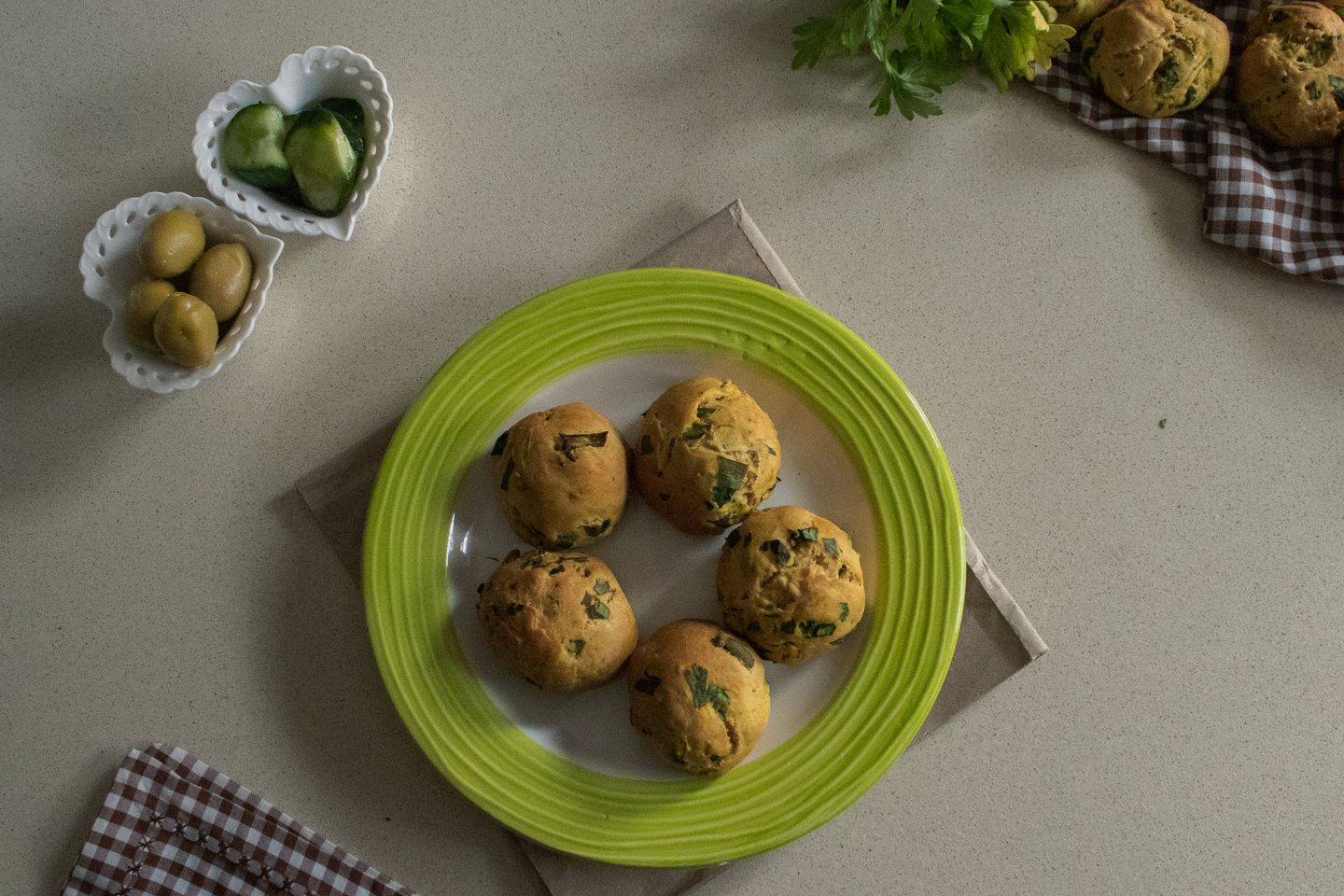
On a table with a pot of soup, a savory muffin can take the place of a roll and bring some flavor of its own. The top is often the strongest part: a strand of cheese has touched the hot pan, the edge has picked up a little color, and the first bite is crisp. The middle still needs to be soft enough to pull into pieces. That balance is easier to get if the cheese inside the batter is in small shreds and most of the liquid comes from something that can be measured, such as milk and yogurt.
The batch here is for six fairly full muffins. It is a useful size when you have half a bunch of chives, a small piece of cheddar, and a soup that is nearly finished. The muffins need some time to cool, so start them before the soup has reached its last adjustment. They can wait on a rack while you put bowls out. You can also make the dry mix early and keep the grated cheese covered in the refrigerator until the oven is hot.
Get the mix-ins ready before the flour gets wet
For six muffins, weigh 200 grams all-purpose flour, 8 grams baking powder, and 3 grams fine salt. Have 90 grams firm cheddar, 10 grams chopped fresh chives, 120 grams plain unsweetened yogurt, 85 grams milk, one large egg, and 45 grams neutral oil. Set aside a little extra cheddar if you want a few crisp patches on top. Grate the main amount on the medium holes of a box grater. Very long shreds can snag on one another when you fold them into a sticky batter. Run a knife through the pile once if the shreds look like ribbons.
Rinse and dry the chives before slicing them. Set the blade over several stems at once and make short cuts. If the chopped chives stick to the knife, scrape them off into a dry bowl. A little lingering water is fine. A wet mass of herbs will cling in one clump and leave a green pocket in one muffin. You can set a small handful aside to scatter over the bowl of soup instead of adding every stem to the batter.
Choose a cheese with enough flavor to come through the flour and yogurt. A mild cheddar gives a round, milky result. A firmer mature cheddar has more flavor in a smaller shred and can brown into distinct patches where it sits near the outside. If your cheese is fairly salty, use a little less fine salt in the dry mix. Taste the cheese on its own before adjusting. It is harder to decide how much salt belonged in the batch once the muffins are cooling.
Let the oven and pan do their part
Heat the oven to 200°C or 400°F. Set a rack in the middle. Lightly oil six wells in a metal muffin tin, including the upper edges if you want the shoulders to release cleanly. Paper liners make it easier to pack the muffins later, although the sides will be slightly softer. If you use paper, choose cases that fit the wells without folding inward at the rim. Creases can catch a little batter and make the edge break when you peel it.
Whisk the flour, baking powder, and salt. Stir in the chives and most of the cheese with a fork to separate the shreds. In a larger bowl, whisk the yogurt with the milk until the mixture is fairly smooth. Add the egg and oil and whisk until you no longer see a separate slick of oil around the edges. Thick Greek-style yogurt may need an extra spoonful of milk to mix comfortably. Look for a mixture that pours in a thick stream.
Tip the dry ingredients into the wet ones. Fold from the bottom with a wide spatula. Work around the bowl rather than stirring quickly in its center. When there is very little dry flour visible, give the bottom one last scrape. Stop once the mixture looks evenly damp. A few lumps of batter will settle in the oven. Stirring until the mixture is completely smooth can develop a chewy texture, especially if you have already spent several passes redistributing the cheese.
Fill the wells and watch the shoulders
Divide the batter evenly among the wells, usually to about three quarters of their depth. Use a second spoon to slide the thick mixture into place. If the tin is unusually shallow and there is spare batter, bake the excess in an additional prepared well. Do not try to get six out of the batch by piling batter above the edges. Sprinkle a few reserved shreds in the center of each muffin. Avoid placing them directly over the rim unless you want to pick a baked strand off the pan later.
Bake for around eighteen to twenty-three minutes. Start checking once the highest part of each top looks matte and the shoulder has begun to brown. A gentle press should leave little indentation. Slide a toothpick into one near the center of the tray. A few crumbs are normal. Wet batter is a sign to give the pan more time. If the toothpick seems coated in melted cheese, try a second spot. It is common for a streak of cheese to look wetter than the crumb around it.
Let the muffins sit in the tin for about five minutes. Then run a small spatula around any stuck edges and lift the muffins to a rack. If a little melted cheese keeps a muffin anchored, loosen that spot first instead of twisting the whole top. Air around the bottom helps the crust stay firmer. A napkin-lined basket can keep them warm for a few minutes once the bottoms have dried. If you move the muffins straight into a tight covered container, trapped steam can soften all the surfaces.
Put them beside the dishes that need them
For a picnic, give the muffins enough time to cool before wrapping them and pack them chilled if you are saving them for later. Carry anything moist that will go inside in a separate small container. A spoonful of thick bean spread can stay in place on a flat cut surface, while sliced tomato or wet greens should be patted dry first. The top can travel as a lid or come off and be eaten separately. A small muffin can hold a few bites of filling, so it is easy to offer two kinds if you have already cut the batch in half.
A vegetable soup that has been blended smooth offers a place for the sharper cheese. Break a muffin in half and serve it on a small plate beside the bowl. That leaves you free to dip the soft crumb and keep the top crisp. A broth with pieces of carrot, beans, or greens can take a whole muffin crumbled over it, but add each piece as you eat so the crumb keeps some shape. For a lunch of salad and a muffin, serve the muffin at room temperature. Its cheese will be firm enough to cut and the chives will still be easy to smell.
If you want a different herb, start with one you already like alongside cheese. Finely chopped parsley gives a mild green note, while a little thyme is stronger by the spoonful. Use less of any herb that has a woody stem or a concentrated taste. Cooked chopped greens can work, but squeeze out their liquid and use a small amount the first time. A wet handful can leave the middle of a small muffin soft after the tops have set.
A different cheese changes the texture as well as the taste. A firm cheese that grates cleanly can often take the place of cheddar. A wet cheese or a creamy crumble behaves differently in the oven and can gather in a single pocket. If you have a soft cheese to use, put a little on each muffin at the table or try just a few small pieces in one test well. Comparing that well with the plain batter will show what the cheese itself brought to the batch.
Save a muffin for the day after
Cool any muffins you plan to keep, refrigerate them promptly in a covered container, and use them within a few days or freeze them. For a firmer top, reheat in a moderate oven. Split one and warm it cut side up if you want a more toasted surface for a little butter. Check the middle before taking it out. An outside that has gone crisp again can conceal a cold center, particularly if the muffin came straight out of the freezer.
Taste a plain piece from the middle before you add anything. If it seems tough, look first at how long the flour was stirred and how long the tray stayed in the oven. If the top browned beautifully but the crumb feels too dry, check the center a few minutes earlier next time. If a soup was all it needed to taste balanced, leave the recipe alone and use the sharper cheese in the soup or salad. A muffin beside another dish can be quieter than one meant to be eaten by itself. Save one with the darkest shoulder for that comparison.