An Evening Coffee Cake
A cinnamon crumb cake to slice after dinner or the next morning, with a reliable way to judge the center under the topping.
8 min read
There is a point in the evening when a cake smells ready before it really is. Cinnamon has reached the hallway. The crumbs on top look dry, and the pan has a faint golden rim. A cake with a topping can make those signs misleading because the middle is partly hidden. Give it the extra check with a skewer, then enough time on a rack to set before cutting. If the cake is for the next morning, the smell from the kitchen will have to do for now.
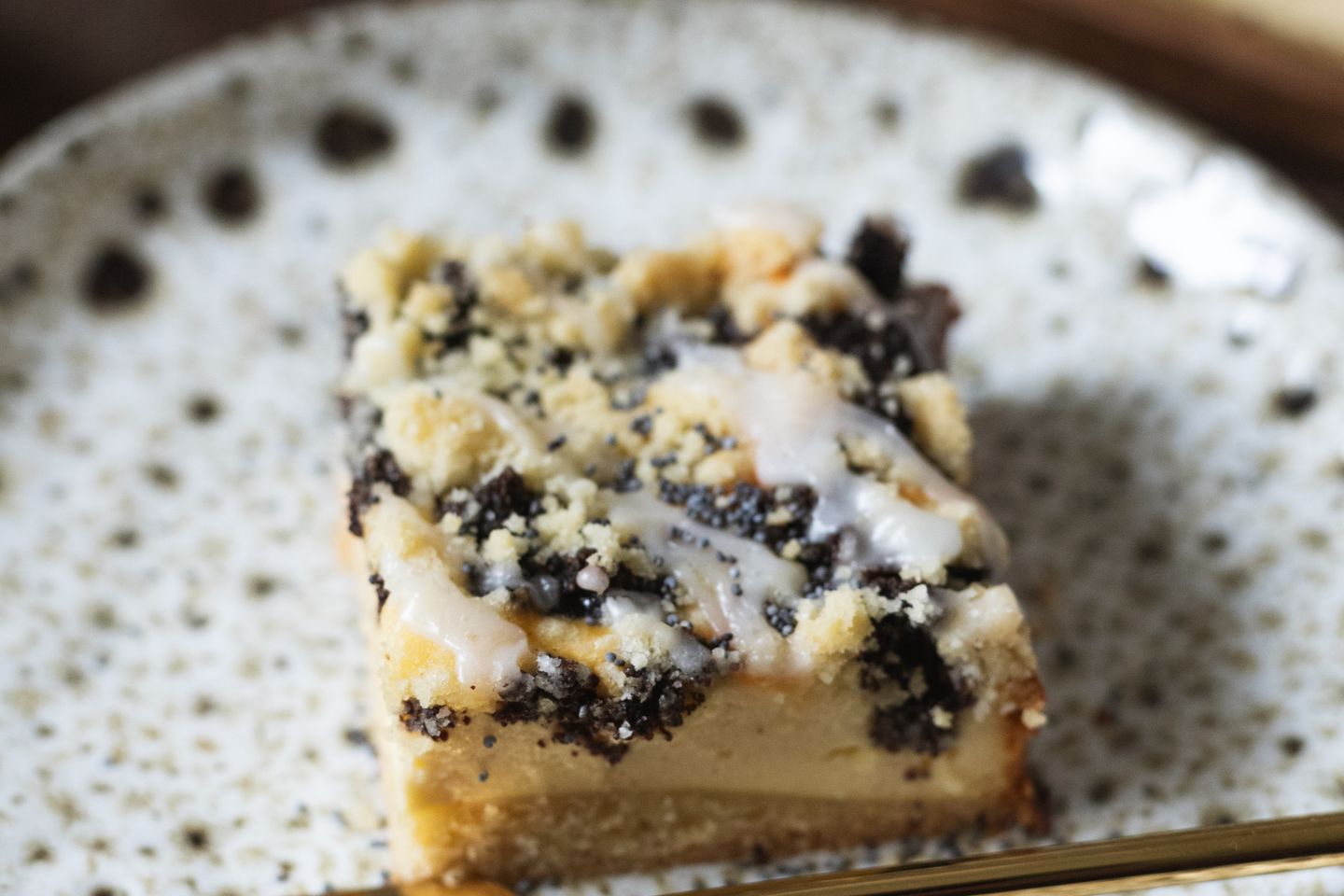
This cake is made to be eaten beside a drink, with no icing to wait for. A thin line of cinnamon runs across the center and an uneven cap of crumbs gives each square a little crunch. The batter is thick enough to hold both, and the smallest square from the corner still has some plain cake. Plan on using a single metal pan. It is easier to learn where a cake is done if you can lift the entire sheet out after cooling and compare one of the edges with the center.
Use one bowl for the crumb and ribbon
For a 20 centimeter or 8 inch square metal pan, first make the crumb topping. Mix 90 grams all-purpose flour, 55 grams light brown sugar, half a teaspoon ground cinnamon, and a small pinch of salt. Stir in 55 grams melted unsalted butter. Use a fork to break the mixture into lumps, leaving a few as large as the tip of a finger. Set it aside. As it cools, you should be able to pick up a little piece without it melting into a smear. If it looks quite wet, wait a few minutes before deciding whether it needs a spoonful of flour.
For the ribbon inside the cake, mix 20 grams brown sugar and a teaspoon of ground cinnamon in a cup. If the brown sugar is hard, rub it apart between clean fingers. You will need to scatter a fine layer over the batter without leaving a single thick pile. A very deep stripe of sugar can turn into a damp seam that separates when you slice the cake. A thin one keeps the top and bottom together and gives a little cinnamon to each bite.
Heat the oven to 175°C or 350°F. Line the pan with parchment, extending it up two opposite sides so there is something to hold when the cake is ready to lift. Lightly grease any bare sides. A dark pan can color the outside more quickly than a pale one. If yours tends to make dark crusts on other cakes, start looking at the edges a little earlier than the time below.
Mix a batter that stays where you spread it
For the batter, weigh 210 grams all-purpose flour, 7 grams baking powder, 2 grams fine salt, 125 grams granulated sugar, and 95 grams unsalted butter. Set out two large eggs, 135 grams plain sour cream, and 45 grams milk. A teaspoon of vanilla is optional. Give the butter a little time to soften until a finger can make a clear dent. Bring the eggs and sour cream out shortly before mixing so they do not harden the softened butter when they meet it.
Whisk the flour, baking powder, and salt in a small bowl. In a larger bowl, beat the softened butter and sugar until they look lighter and there are no hard pieces of butter. Use a wooden spoon or a mixer on medium speed. Beat in the eggs one at a time, scraping the side before adding the second. If the mixture looks a little split after the second egg, stir in a spoonful of the measured flour. It will generally even out as the dry ingredients go in. Stir the milk, sour cream, and any vanilla together separately.
Fold about a third of the flour into the butter mixture, then half of the sour cream mixture. Repeat, finishing with the last of the flour. Use a spatula and scrape the bottom to pick up any streaks. The batter should sit in a mound briefly when a spoonful is dropped back into the bowl. That is useful at the next step. Stop mixing once it is even. A few bubbles in the surface are normal after beating the butter and sugar.
Put the ribbon where the knife will find it
Spread roughly half the batter in the lined pan. Use the back of a spoon to push it toward the corners while keeping the layer about the same thickness across the bottom. Scatter the cinnamon mixture evenly. Keep a narrow border clear so the two layers of batter can join at the edges. If a spot looks very dark, tilt the pan slightly and tap to spread the loose sugar before adding the top layer.
Place the rest of the batter in several small spoonfuls across the pan. Flatten those mounds gently until they meet. This takes less dragging than trying to spread the whole second half from one side. A little cinnamon may show through in places. The crumbs will cover those spots. Break up any huge lumps in the crumb bowl and drop the topping onto the cake. A mix of sizes works best: finer crumbs can fill spaces, while a few bigger pieces give the knife something distinct to break through.
Once the topping is on, give the pan a very gentle tap to settle the batter into the corners. Leave the crumbs loose. Pressing them firmly into the wet batter can make a dense layer at the top. If you would like to see how the bare cake rises, leave a small gap between crumbs near one edge. It gives you a place to check color and makes it easier to recognize when the surface below has turned matte.
Give the middle time to catch up
Bake on the middle rack. Begin checking after thirty-five minutes. The edges should look set, and the topping should have several golden patches. Slip a thin skewer into the center, trying to pass between two large crumbs. A few damp crumbs are fine. A streak of opaque, wet batter needs more oven time. If you hit the cinnamon stripe, move the skewer a little and try again. The stripe may leave a thin dark mark even after the cake around it is baked.
Check the two inches nearest the center before relying on an edge. The edge can be firm well before the center has lost its jiggle. If the top looks brown early, rest a loose piece of foil above the cake and let the center finish. Ovens and pans vary, so the full bake can be nearer forty-five minutes. Once done, set the pan on a rack for twenty minutes. Move a thin knife around any side that is uncovered by paper. Lift the cake by the paper only when it can hold its weight without bending sharply.
If the cake needs to sit overnight, wait until it is completely cool before covering it. Warm cake releases steam that can soften the topping in a closed tin. For an evening slice, let it cool long enough to cut cleanly, then use a thin serrated knife. Start with a few light passes through the crumb. Pressing down hard can push the topping into the cake or scatter it off the sides. Sweep any loose crumbs onto the plate and put them back on top after the slice is in place.
Cut squares that show the difference
Cut one piece from the middle and one from a corner. Look at the ribbon through both pieces. If it has spread into a wide dark patch, use a finer layer of cinnamon sugar next time. If the center layer has almost vanished but the cake tastes evenly spiced, you may prefer it that way. A golden corner can have slightly firmer cake than the middle. If the corners are hard and the center is just baked, try a lighter-colored pan or move the rack higher if the bottom was what darkened.
Keep cooled, plain cake covered in a dry, cool place for a short time, or freeze slices for later. Put a piece of parchment between slices before freezing so the crumbs keep their shape. Let a slice thaw before warming it gently if you want to bring back some of the toasted smell. The best way to serve it may still be at room temperature with coffee or tea. Then you can taste the difference between the cinnamon in the cake and the butter in the crumbs without the two textures disappearing into one.
For a future tray, consider using the same batter and making half the crumb with a little finely chopped pecan. Keep the two kinds separate across the pan so everyone can choose a slice. If you prefer a calmer cake with fewer crumbs, use a little less topping and leave it in broad patches. The cake underneath should still be pleasant enough to eat on its own. That is a better reason to return to the recipe than getting a perfectly straight stripe on every piece.
When serving the cake over two days, leave the uncut portion in one piece. The exposed edges of a square dry much faster than the edges of a half cake. Bring a cold slice back to room temperature before you judge the crumb. A short warm-up in a moderate oven will make the butter in the topping fragrant again and leave the center tender. Give the slice a few minutes on a rack so the underside stays dry.