Soft Polenta with Sweet Corn
Cook coarse cornmeal to a loose, creamy spoonful and add browned sweet corn, butter, and fresh basil just before serving.
8 min read
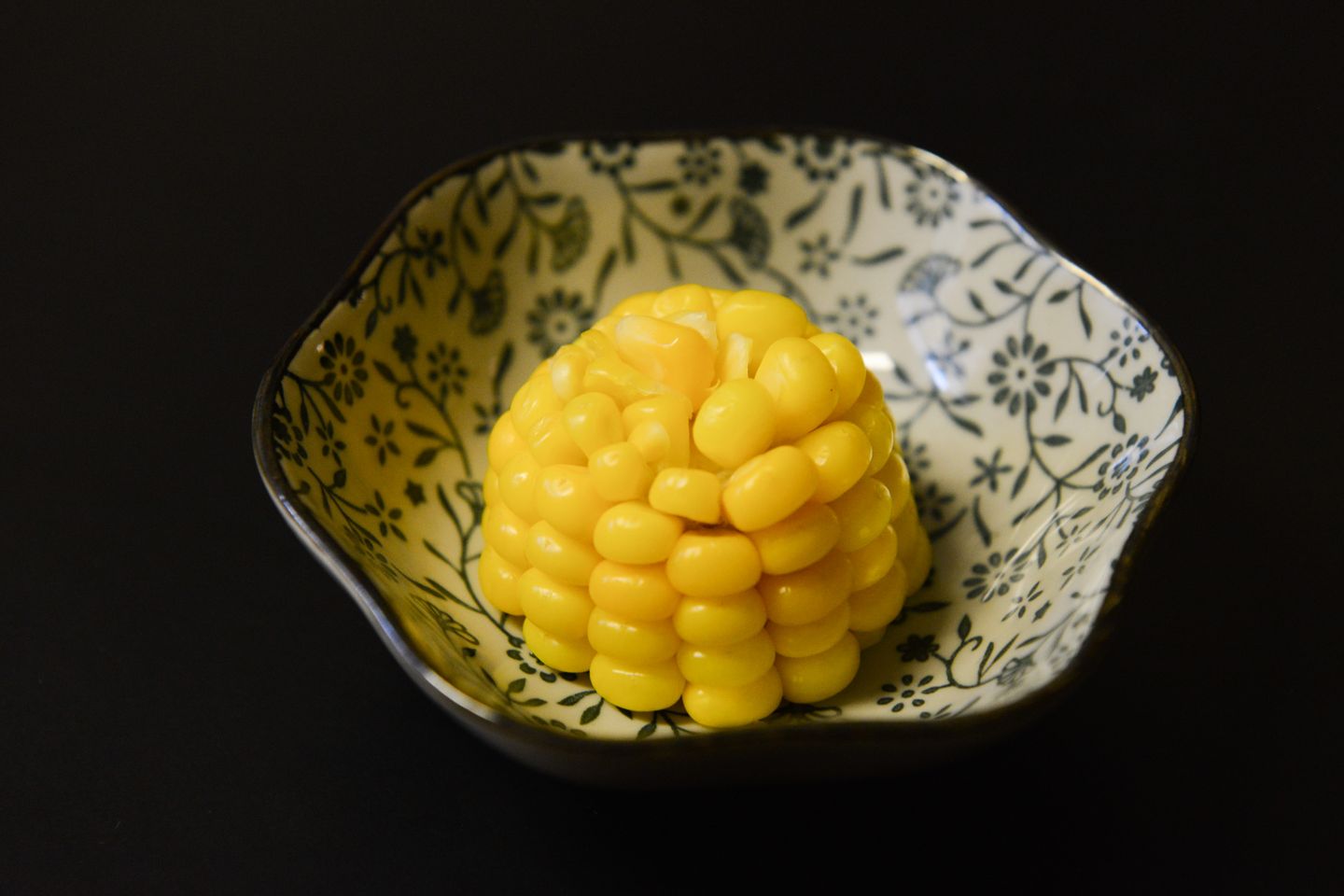
Hot polenta runs out of the ladle in a wide ribbon. By the time you bring it to the table, the ribbon holds a faint ridge. That short interval is when it makes the best bed for browned sweet corn. The kernels sit on the surface long enough to see, then turn up in every bite. A pot of plain cornmeal has a different sweetness from corn cut off a cob. Keep the two apart for most of the cooking so each has time to develop its own flavor.
Start with coarse or medium yellow cornmeal sold for polenta. The meal can be stone-ground or more evenly milled. Inspect the package because some products labeled polenta are precooked and call for a much shorter simmer. The familiar ready-made tube from the refrigerator case is a firm, cooked product intended for slicing. Save it for a recipe where it can be browned. This supper starts with dry grains and deliberately stops at a much softer texture.
Ingredients for four portions
- 1 cup medium or coarse yellow cornmeal, about 155 grams
- 4 cups water, plus another cup of hot water held in reserve
- 3/4 teaspoon fine sea salt, divided, plus more to taste
- 2 ears sweet corn, about 1 1/2 cups kernels, or the same amount of frozen corn
- 1 tablespoon olive oil
- 3 tablespoons unsalted butter, divided
- 1/2 cup finely grated Parmesan, about 35 grams
- 8 to 10 fresh basil leaves
- 2 teaspoons fresh lemon juice, plus more to taste
- Freshly ground black pepper
A medium saucepan with a heavy base is helpful because the bottom stays at a steadier temperature when the burner is low. A long-handled spoon keeps your hand out of reach of the occasional popping bubble. Keep a whisk nearby for the first minute, when separate grains need to become suspended in the water. A 10-inch skillet is large enough for the kernels to brown in one layer. If you double the corn, brown it in two batches, even if there is room for more polenta in the saucepan.
Choose a block of Parmesan that you can grate finely. Pre-grated cheese can work, although some blends leave small flecks because their grains are drier or coated with powder. If the block has a firm rind, trim that away before grating. Another hard, salty cheese works when added by taste. Start with slightly less if using a particularly salty pecorino. Use a vegetarian hard cheese if you want a vegetarian dish and the Parmesan available to you is made with animal rennet.
Simmer the cornmeal slowly
Bring the four cups of water and 1/2 teaspoon salt to a boil. Lower the heat to medium-low. With one hand whisking steadily, pour the cornmeal in a thin stream with the other. Sweep the whisk around the corners of the saucepan as well as the middle. That first pass breaks up pockets of dry meal. The water turns cloudy and then begins to thicken. As soon as the surface bubbles gently, turn the heat down far enough to maintain only a quiet simmer.
After the first few minutes, trade the whisk for the spoon. Stir and scrape the bottom at intervals of a few minutes, paying particular attention to the places that the spoon seems to catch. You should see occasional bubbles open and close. If you see the mixture suddenly rise in one spot and spit, lower the heat and stir from the side of the pot, with your face and free hand away from the rim. A lid set slightly ajar will contain splashes, although it slows evaporation and may change how much additional water you need.
Begin tasting a sample after about 25 minutes. Coarse polenta may take 35 to 45 minutes, or longer depending on the grind. Let the sample cool on a saucer before tasting. It can have small grains you can feel, especially if stone-ground, but they should yield easily between tongue and palate. If the meal feels hard or sandy and the pot is thick enough that a spoon leaves a channel, add about 1/4 cup of hot water and keep cooking. Adding hot water lets the simmer resume promptly. Another splash later is easier than trying to cook excess water away quickly at the end.
If you get a few lumps early on, use the edge of a whisk to press them against the side of the pan before the rest of the cornmeal sets around them. A lump with a dry core usually stays dry during the simmer. You can lift the offending lumps out with a spoon when they are few in number. If the bottom catches and darkens, transfer the part above it to another pot immediately, leaving the stuck layer behind. Scraping a burned layer into the new pot will make the entire dish taste smoky.
Give the kernels their own pan
While the polenta softens, cut the corn off the cobs. Lay an ear on its side on a board and slice off a strip of kernels. Roll the ear onto that flat side and repeat, turning it as you go. Working horizontally keeps the cob stable and most of the kernels on the board. A few bits from the cob are fine, but avoid shaving away the tough pale core. Frozen kernels can go directly into the skillet. Knock any large pieces of ice loose first and expect the pan to need more time to get hot again.
Heat the olive oil over medium-high heat until it moves easily across the skillet. Add the kernels and spread them out. Leave them for about 2 minutes before stirring. This first stretch in contact with the pan lets a few kernels spot brown without cooking all the moisture out of the rest. Continue cooking and stirring occasionally for another 3 to 5 minutes, or until the corn is hot and the edges have browned in places. Add 1 tablespoon butter and the remaining 1/4 teaspoon salt. Shake the skillet until the butter coats the kernels. Take it off the heat and add the lemon juice.
Taste a kernel before assembling. Very sweet corn usually takes well to a few extra drops of lemon. Late-season corn can be firmer and less sweet. Cook it a little longer at medium heat if it still tastes starchy in the center. If it has browned enough but needs softening, add a tablespoon of water and cover the skillet for one minute. Lift the lid and let the last drops evaporate. The pan should look dry enough that you can tip its contents straight onto the polenta without creating a puddle.
Adjust both parts just before serving
When the polenta is tender, turn off the heat. Stir in the remaining 2 tablespoons of butter and most of the grated cheese, saving a little for the bowls. Move a spoon across the bottom. The line it leaves should close up gradually. If the meal gathers in a stiff mound, add hot water, 2 tablespoons at a time, until it can flow slowly from the spoon. The firmness will increase quickly once you divide it into portions, particularly if the bowls are cold.
Spoon the polenta into shallow bowls. Divide the kernels over the top and spoon over the drops of lemony butter left in the skillet. Tear basil leaves into large pieces and scatter them over the bowls, followed by pepper and the reserved cheese. Add the leaves at the table if you need the bowls to sit for a few minutes. Basil darkens and softens when it touches hot liquid. Leaves left intact until the last moment smell much fresher than a pile chopped at the start of cooking.
To make the bowl a fuller dinner, add a mound of sautéed greens to one side. A handful of arugula can go straight into the bowl. Kale or chard needs time in a pan first. The portion of corn stays the same, and it is still worth piling it in a separate spot. Mixing the greens and the kernels into the pot makes it hard to adjust the seasoning of either, and it also hides the contrast between a creamy base and a crisp topping. A few fresh or roasted cherry tomatoes can bring some acidity to the plate when there is no lemon.
Plan for the pot to change as it cools
If dinner is delayed, put the saucepan over low heat briefly, stir in a little hot water, and return the lid. Check after a few minutes. To hold the corn, keep it in its own pan with the heat off. A fresh knob of butter will help it recover if it looks dry when warmed. That is easier than making loose polenta again after it has set completely. Warm a bowl for each person who is eating now. Leave the rest in the pot and finish it only when the next person arrives, without leaving cooked food sitting at room temperature.
Leftover polenta can be deliberately set. Transfer the extra to a shallow, lightly oiled container and refrigerate it promptly. When cold, turn it out and slice it about half an inch thick. Use a knife dipped in water to get a smoother edge. Brown the slices in a small amount of oil in a skillet until the outside is crisp and the center is hot. Don't move a slice until the surface under it has formed a crust. The difference between the fried slice and yesterday's loose bowl gives you a good reason to save enough for lunch.
For another soft bowl, reheat chilled polenta in a saucepan with enough water to loosen the pieces as they warm. Break them up against the side with the spoon, and stir more often than you did when the fresh cornmeal was cooking. The mixture starts out firm on the bottom before it turns creamy again. If there is a spoonful of leftover corn, set it on top of the reheated polenta with a little more lemon and a fresh leaf of basil. You can cook both components ahead, but the meal benefits from having its herbs and final seasonings added after reheating.