Roasted Squash with Crisp Sage
Cut thick crescents from a winter squash and roast them until their edges buckle, then spoon over browned butter and crisp sage.
8 min read
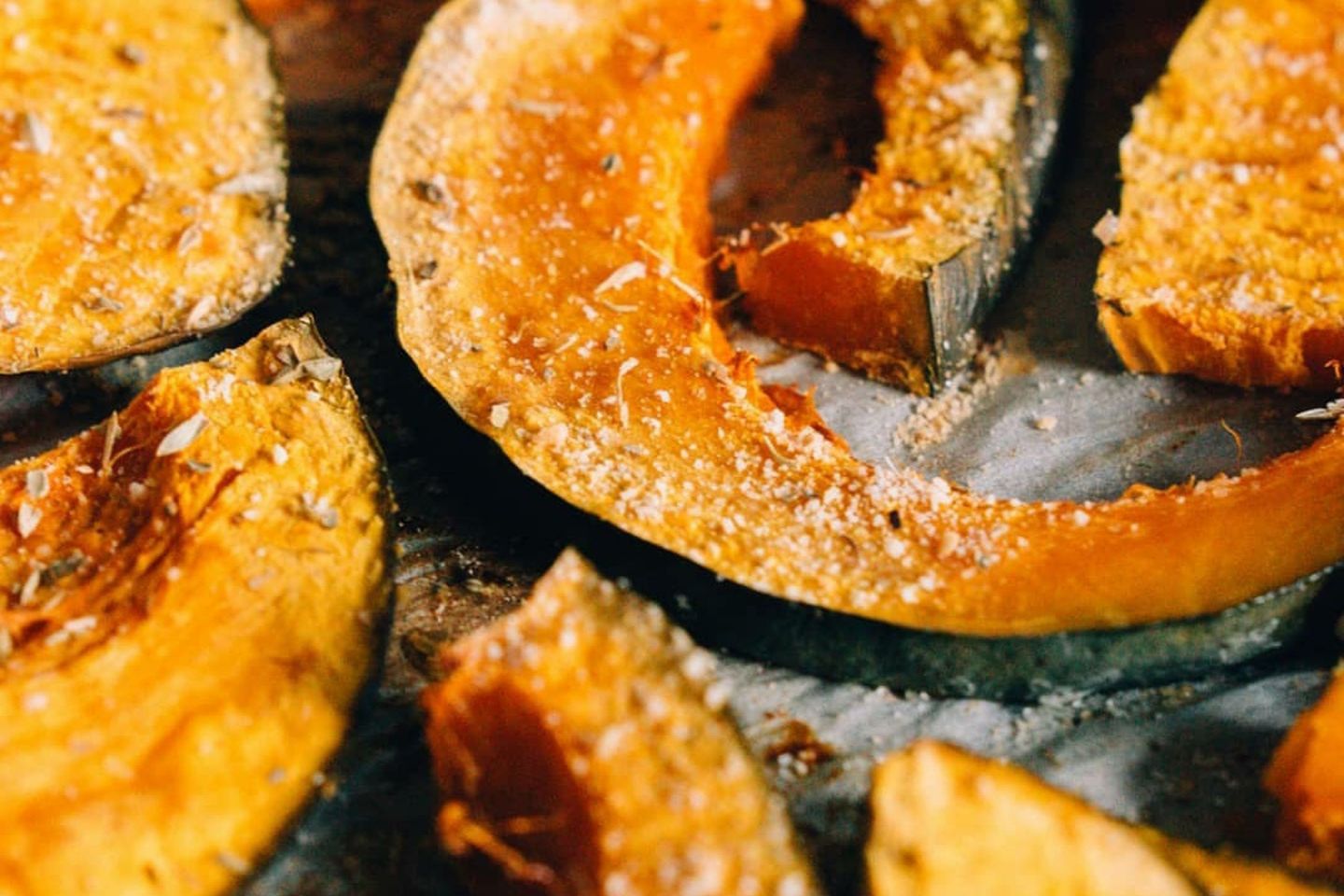
A squash sliced into thin arcs looks like it will roast quickly. It will, but the slice can dry all the way through before it gets a good patch of color. A wedge about two fingers thick gives the oven more to work with. By the time the bottom has browned, the middle has softened enough to scoop with a spoon. The skin keeps the wedge together as you lift it out. Some skins become tender enough to eat, and some do a better job of holding the flesh on the plate. It is worth learning which kind you have before you decide whether to get out a peeler.
Serve these crescents on a wide plate so the crisp edges are easy to reach. Browned butter carries the scent of sage across the squash. A little lemon cuts the richness and gives the softer center something to taste of besides its own sweetness. This is a side for four people or a quiet lunch with bread and an extra dish of greens. The only part that needs to happen near the table is the pan of butter. The squash can hold for a short while once it is cooked.
Choose the squash with the knife in mind
Use one small winter squash weighing around 900 grams to 1.1 kilograms. Delicata, acorn, or butternut all work, but their shapes lead to different cuts. For seasoning, use 1½ tablespoons neutral oil and about ½ teaspoon fine salt. For the finish, set out 3 tablespoons unsalted butter, eight to twelve fresh sage leaves, and half a lemon. A spoonful of toasted hazelnuts is optional. If you use them, chop them coarsely after toasting and set them aside. Sprinkle them on the squash with the sage so they keep their crunch. A few pieces per wedge are enough. Choose one squash with a firm, dry surface and a stem that does not feel damp. A little scarring is ordinary. Leave squash with soft patches or splits at the market.
Delicata has a thin skin and shallow flesh. Cut it into crosswise rings after removing the seeds, or make half moons if the squash is narrow and difficult to hold. An acorn squash is easier to split along its ridges and to cut again from the flat face. The stem itself can be too hard to go through with a household knife. Cut beside it. Butternut is most manageable when you separate the long neck from the rounded seed end. Cut the neck into thick planks or rounds and split the seed end before you remove the seeds.
Wash the outside and dry it. Put a damp towel under the cutting board to steady it. Create a small flat surface by cutting a thin strip from the side if the squash keeps rolling. Use a sturdy knife with a clean, dry handle and keep your supporting hand well clear of the blade. If the knife sticks, set the squash down, stop pushing, and reposition it so that the next cut is straight and supported. A small winter squash is worth buying precisely because it is easier to handle. You can buy precut squash if the size or shape of a whole one makes cutting awkward.
Scrape the center without thinning the wedge
Use a spoon to remove the seeds and the loosest threads. A sturdy tablespoon with a thin edge gets into the curves. Leave the denser orange flesh where it meets the cavity. Shaving away too much creates a thin edge that dries before the rest is ready. Set aside any seeds you want to cook separately. They need rinsing and drying and take much less time in the oven, so they are better left off this tray. The half of a squash that has the wider cavity can be cut into shorter wedges. They should still be a similar thickness where the flesh is deepest.
Peel butternut for a plate that is easy to eat with a fork. Delicata can generally stay unpeeled. Acorn skin varies from one squash to the next. Leave it on for roasting and let each person decide whether to eat it, or trim it from the cooked wedges if it is too tough. Peeling a ribbed squash raw is rarely worth the trouble. When the squash is done, a spoon can separate the flesh from a tough skin with much less waste. Keep the wedges on their cut sides so the skins do not have to serve as the browning surfaces.
Give one side time to darken
Heat the oven to 220°C or 425°F with a rack in the middle. Toss the wedges with the neutral oil and the salt. A large bowl lets you turn them without rubbing the thinner pieces against the sides. If you have a mixture of skin-on wedges and peeled rounds, toss the peeled pieces gently so their corners stay intact. Arrange the squash on a rimmed metal pan, in a single layer. Put the biggest flat face down. Keep a little room between pieces so the air can carry away steam. Two smaller pans are useful when one large pan would be crowded.
Roast about 20 minutes, then take a look at the underside of one thick wedge. The squash may still be firm near the skin. Give it more time if the bottom is still pale or the wedge sticks tightly. Turn the pieces when their undersides have a deep golden patch. Roast until the flesh yields easily when pierced with a table knife, usually another 10 to 20 minutes. Thin delicata rings will finish sooner than broad acorn wedges. Remove the quick ones before they become papery and let the rest finish on their own. A hard center with dark ends is a sign that the cuts were uneven or that the oven is running hot. Reduce the temperature a little and keep cooking.
If the squash is tender and pale, turn it over to a fresh part of the pan and let it roast a few more minutes. When it has already become very soft, avoid trying to create color at the expense of its shape. The butter will add plenty of aroma, and a soft wedge is easier to eat than one that has broken apart in a hot pan. Lift it with a flexible spatula, getting the blade completely underneath before you raise it. A spoon can support the high side of a particularly soft piece. If you roast on two racks, trade the upper and lower pans when you turn the wedges. The pans closest to the heating element can color much faster, particularly in a small oven.
Brown the butter in a pan you can read
Dry the sage leaves after rinsing them. Wet leaves will spatter when they touch hot butter. Melt the butter in a small light-colored skillet over medium heat. When it foams, add the sage in a single layer and let the leaves fry until they stiffen and the bubbling around them slows. Lift the leaves out with tongs and set them on a plate. Keep swirling the skillet. The butter solids will settle and go from pale gold to hazelnut brown. The smell changes from warm milk to toasted nuts. Take the pan off the heat and pour the butter into a small heatproof bowl at that point.
If the butter darkens all at once, it may have been in a pan that holds heat for a long time. Next time use a lower flame and pull the skillet a moment earlier. A few dark flecks are fine. If the butter smells sharply burned, use a little fresh butter for the squash. The sage can still go on if the leaves taste good. To cook without dairy, fry the sage in a thin layer of olive oil and take it out as soon as it crisps. Warm the oil gently to bring out the scent. It will not turn into browned butter, but it works with the same amount of lemon.
Finish each wedge where you can see it
Move the roasted squash to a platter and use a teaspoon to put some browned butter across each wedge. Add a little salt only after tasting the first one. Squeeze lemon over the whole plate or set the cut lemon on the side if someone prefers a sweeter serving. Break half the sage leaves into large pieces, then leave the others whole so they keep their shape and snap. Add them as you carry the dish out. Warm squash gives off enough moisture to soften the leaves if the platter sits covered.
At dinner, the easiest companion for this dish is something with a different temperature or texture. A cold apple slaw makes sense with warm squash. So do slightly bitter greens in a sharp dressing. If you want to make the wedges the center of lunch, spread white bean puree on toast and set two crescents on top. A spoon of plain yogurt is good beside a wedge that is particularly sweet. Keep any extra sage separate from refrigerated leftovers. The squash is pleasant reheated in an open skillet until its bottom dries a little. Use a new squeeze of lemon when you bring it back to the table.