Lemon Orzo with Asparagus and Peas
Cook the asparagus and peas in the orzo pot, then finish the pasta with lemon, parsley, and enough cooking water to keep it loose.
8 min read
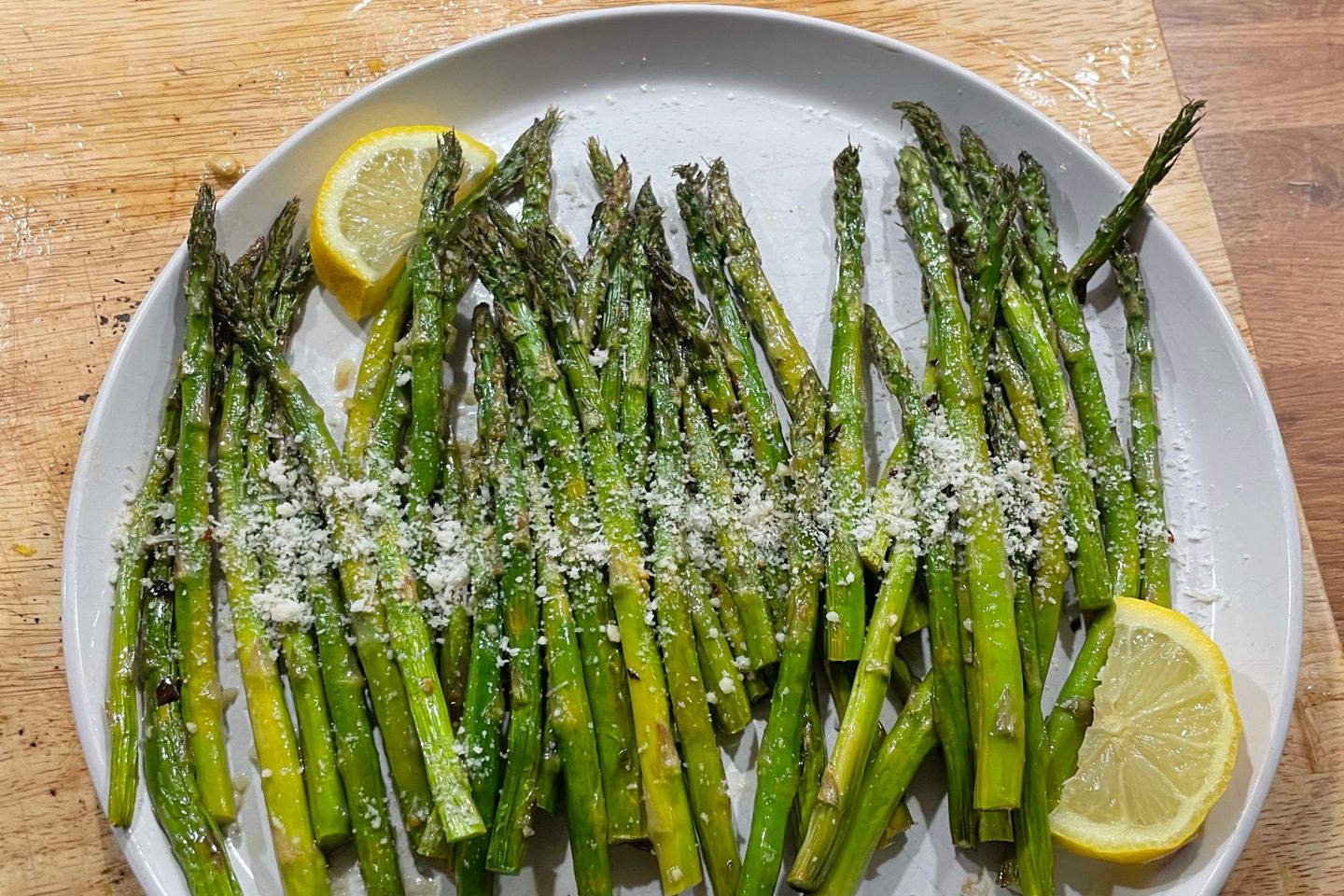
When asparagus first turns up in the market, it can be hard to buy exactly enough for a recipe. A bunch may contain twelve stout stems or twice that many slender ones. Either kind works in a saucepan of orzo. Cut the thick stalks shorter, leave the tips whole, and let the pasta provide a clock for cooking both. There will be a bright green piece in one spoonful and several almost sweet peas in the next. Lemon gives the two vegetables something in common without making them taste alike.
The useful trick is to finish the orzo in the pan with the burner off. Butter and a small quantity of the pasta water give the grains a little gloss. The liquid gets between them and lets the lemon juice disperse. That loose texture disappears quickly if you continue to cook it down in a hot pan, or if you set the saucepan aside for half an hour. Have the lemon, cheese, and parsley ready when the pasta goes into the water. The only task left at the stove should be tasting a spoonful.
Ingredients for four servings
- 12 ounces dried orzo
- 1 pound fresh asparagus
- 1 cup frozen peas
- 1 medium lemon
- 3 tablespoons unsalted butter
- 1 tablespoon extra-virgin olive oil
- 1/2 cup finely grated Parmesan, about 35 grams, with extra for serving if you like
- 1/3 cup loosely packed flat-leaf parsley leaves
- Fine sea salt for the water and the finished dish
- Freshly ground black pepper
Use a pot with enough room for the pasta to move even after you add the vegetables. A five-quart pot with about three quarts of water works well. Use a colander with smaller holes than you would choose for spaghetti. Orzo slips through wide slots. Set a heatproof measuring cup near the sink so you can save some cooking water before you tip everything into the colander. This is a good moment to find a broad serving spoon. Tongs have a tendency to leave the orzo behind.
Fresh peas can be used instead of frozen. Small, sweet peas often need little cooking. Larger, starchy peas may take two or three minutes. If you have a mix of sizes, cook a tablespoon of rinsed peas in a little boiling water to get a sense of the timing. Taste one from each size and check whether they are ready together. Use frozen peas when the peas available in the produce aisle are already losing their sweetness. They can go into the pot straight from the freezer.
Prepare three cuts of asparagus
Rinse the asparagus and cut away its dry ends. Some bunches have a fairly clear transition from tough white base to tender green stalk. If it is less clear, snap one stalk close to the base and use the break as a rough guide for trimming the others. To save flesh on a particularly thick stem, trim just the woody end and peel the next inch or two with a vegetable peeler. You should be able to put a thumbnail into the remaining green flesh without much effort.
Cut off the tips about 1 1/2 inches from the top and pile them to one side. Cut the upper stems across into half-inch pieces. Look at the wider lower stems separately. If any are as wide as your thumb, split those lengthwise once before cutting them crosswise. Keep the tips separate from the pieces of stem. They cook quickly and look more intact if they go in last. Slender stems can be left a little longer. That makes them easier to see among the grains of pasta.
Wash the lemon and grate about 1 teaspoon of the yellow zest into a small bowl. Cut the lemon and squeeze 2 tablespoons of juice into another cup. Save the rest for tasting. Finely chop the parsley, leaving several leaves whole if you want them for the bowls. Grate the cheese before you start cooking. A fluffy pile measured loosely dissolves more easily than thick shreds, which may form strings when they meet a small amount of very hot water.
Let the pasta clock guide the vegetables
Bring the water to a rolling boil. Add about a tablespoon of fine salt and the orzo. Stir along the bottom immediately so the wet grains don't settle into one mass. Set a timer for two minutes less than the package's suggested cooking time. Check by tasting a grain when the timer rings. It should be flexible and a little firm in the middle. If it still crunches sharply, cook another minute before adding the vegetables. Very small orzo can cook ahead of the printed time, so use the timer to remind you to check rather than to declare it done.
When the orzo has about two minutes left, add the pieces of asparagus stem. Use a spoon to make room so they enter the water quickly. After about 45 seconds, add the tips and frozen peas. Bring the water back to an active simmer and cook until the asparagus is bright and easily pierced, the peas are heated through, and the orzo is tender but still has a little firmness. If the pot cools significantly after adding the frozen peas, give it a little time to recover. Test the pasta and a larger asparagus piece separately.
Before draining, scoop out about a cup of cooking water. Drain the pot and shake the colander once or twice. Avoid rinsing. The water still adhering to the orzo is useful for making the finish, while cold water would chill the vegetables before you could dress them. Return the contents of the colander to the empty pot right away. A pasta grain caught in a hole will come loose more easily when wet. You can rinse the colander after the pasta is back in the pot, while any stray bits are still soft.
Finish the sauce with the heat off
Cut the butter into several pieces and add it to the hot pasta with the olive oil, lemon zest, and about a quarter cup of cooking water. Stir with a flexible spatula until the butter melts. Fold in most of the Parmesan and the chopped parsley. Add about half the measured lemon juice and taste. If the mixture looks dry or the cheese is starting to gather in small clumps, add cooking water a tablespoon at a time and stir well between additions. The idea is to have a shallow coating around the grains, with no visible pool at the bottom.
Add the rest of the lemon juice in small amounts. How much you need depends on the size and acidity of the fruit. A little more black pepper can add some interest if the lemon is already pronounced. Salt the finished orzo only after tasting it with the cheese. Both the cheese and the reserved water carry salt. If you've already reached the right seasoning and the pot still needs loosening, add a splash of unsalted hot water. Warm the bowls with a little hot tap water and dry them. The orzo will remain soft longer in a warm dish.
Serve it while the asparagus is at its best
Set the orzo in shallow bowls with the remaining Parmesan and the whole parsley leaves. If an asparagus tip stands up in the spoon when you serve it, leave it there. The pasta is small enough to hide the vegetables even though they're doing much of the work. To serve with a roast, spoon the orzo in a broad arc on a platter. Leave space for the main dish so the pasta doesn't take up all of its juices at once. A crisp radish and lettuce salad makes a good side when this is the main course.
If you are using the dish as a light lunch, put a few toasted almonds on the table. Slice them thinly or use slivered almonds and toast them in a dry skillet over moderate heat until they color. Let diners add them to individual portions. Nuts folded into the pot quickly lose their crispness, and some people prefer to eat the tender asparagus tips without an added crunch.
For a picnic-style salad, make a few small changes from the start. Use two tablespoons of olive oil in place of the butter, cool the cooked pasta and vegetables promptly in a shallow container, and chill them covered. Stir in the lemon juice, cheese, and parsley just before serving, then adjust the dressing with a little fresh oil. The cold version is firmer and the lemon often tastes less apparent. Put extra wedges on the side rather than guessing how much more it needs.
Keep any second serving loose
If you plan to save some of the warm orzo, stop before adding all of the parsley and lemon and put that portion in a shallow container in the refrigerator promptly. Reheat it in a covered saucepan with a few spoonfuls of water. Stir gently and add more water if it sticks. When it is hot, finish with a new squeeze of lemon or a scattering of herbs. It will be a little softer than the first night, and the asparagus will no longer be quite as vivid. Leftover orzo can also be stirred into a hot bowl of broth at the last minute. A few spoonfuls give a clear vegetable soup the substance of a meal without requiring a whole new pot of pasta.