A Pan of Green Beans
Steam the beans under a lid, finish them on bare metal, and bring them to the table with a spoonful of shallot vinegar.
8 min read
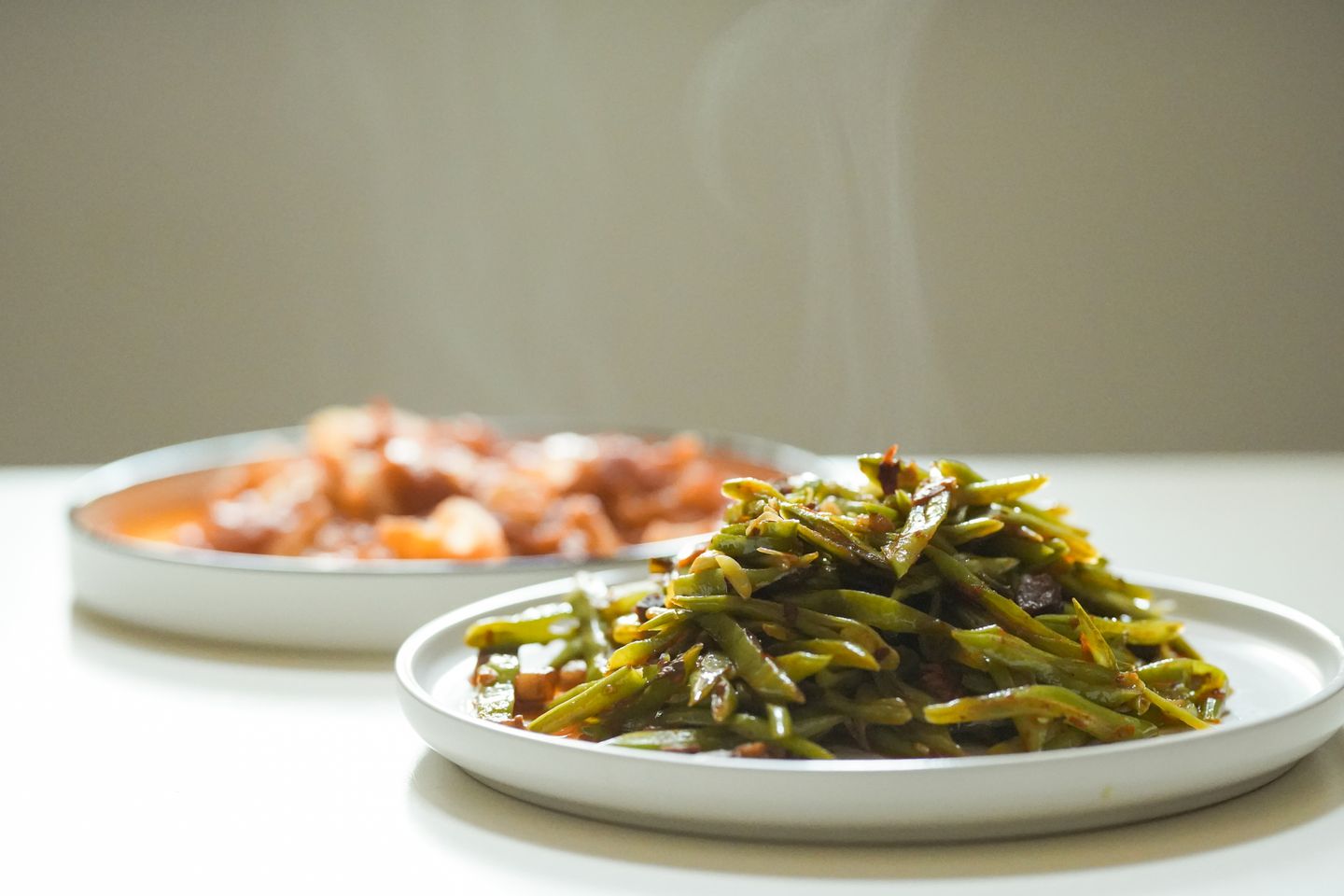
Set a cooked green bean on the cutting board and press it with the back of a fork. A good one buckles at the point where the fork touches it. A very raw one pushes back and springs away. A bean cooked too long flattens straight down. There is room for preference between these three states, but the middle one is a useful target for dinner. It lets the bean keep its character without making everybody chew on the fibrous end of a pod. A shallow pan, a lid, and a little water are enough to get there.
These beans are finished with a sharp spoonful of shallot vinegar and soft herbs. They are good at room temperature and can be made while another part of the meal occupies the oven. The recipe makes enough for four people alongside a main dish. For two people having the beans with toast and cheese, serve the full pan and have a second lemon or a little more vinegar on the table. It is a simple preparation. What changes it from one night to the next is the state of the beans when they come home and what you do in the few minutes between the lid and the plate.
Look for beans that behave alike
Buy 450 grams of fresh green beans. Pick firm pods with only small seeds showing through their skins. A bean with conspicuous lumps along its length may be perfectly usable, but it will often need more time than the very thin pods sold in the same bin. Look for enough similar ones to fill the pan once. If all you have is a mix, separate the fattest ones from the slender ones at the cutting board. Give the large pods a short head start. You can do the same thing with yellow wax beans and green beans in the same dish. Sort by size instead of by color.
For the dressing, use 1 small shallot, 1½ tablespoons red wine vinegar, a pinch of fine salt, 2 tablespoons olive oil, and 2 tablespoons chopped dill, parsley, or a mixture. For the pan itself, use 1 tablespoon olive oil, a little salt, and 3 tablespoons of water. Have more water nearby, especially if your skillet has a loose lid. A heavy skillet about 28 centimeters across gives a pound of beans enough room for the final browning. A smaller one may need two batches or a longer uncovered finish.
Rinse the beans under running water and drain them. Cut off the dry stem end where the bean was attached to the plant. The pointed end is usually tender and can stay. If you see a string coming away when you snap the stem, pull it down along the pod and discard it. This step matters more with broad or older garden beans. The narrow supermarket kinds often need only trimming. Leave the trimmed beans whole if they fit the pan. Cut very long ones in half on a diagonal. The opening lets you see how much the seeds have developed, and the pieces fit more easily on a fork.
Give the shallot time in the vinegar
Cut the shallot into thin pieces. If it is as large as a small onion, use half. Mince it finely for a dressing that clings to the beans. Thin half moons work if you like a more distinct bite and want the shallot to show. Put the pieces in a small bowl with the vinegar and a pinch of salt. Stir once and leave them while the beans cook. The edges soften and the harshest part of the raw onion taste subsides. After five minutes, taste a single piece. Leave it a little longer if it still seems stronger than you want.
Prepare the herbs and set them on the board away from the wet beans. Dill is soft enough to tear. Chop parsley with some of the thin stems, where much of its flavor is. Chives can be sliced into short lengths and mixed in at the last minute. If you are using mint, use a small amount and tear it just before serving. It can turn dark in vinegar and its flavor is strong enough to cover a mild batch of beans. A few leaves scattered over the plate are easier to adjust than a handful stirred into the dressing.
The vinegar is doing two jobs. It softens the shallot while the dressing sits, and it brightens the beans at the table. For a gentler dressing, choose white wine or cider vinegar and taste before pouring the full amount onto the vegetables. Lemon will work when you want a more fragrant plate. In that case, mix the juice with the shallot as usual and keep some zest for the end. A mild olive oil is useful if the vinegar is already strong. A little more salt will often round it out without requiring additional oil.
Start covered and finish in the open
Set the skillet over medium-high heat. Add the spoonful of olive oil, then the beans and a pinch of salt. Roll them in the oil with a spatula. Let the thickest beans go in thirty seconds or so before the rest if you sorted them. Pour the water into a clear spot at the side of the pan and put the lid on quickly. The water should hiss and send steam up around the lid. Reduce the heat a little if it sounds like a hard boil. Give the beans about three minutes before lifting the lid to check a thick pod.
Use the first check to decide whether you need more water. If the bottom is dry and the thick bean still tastes raw, add another tablespoon of water and replace the lid for a minute or two. If the beans are barely tender and a thin layer of water still moves at the bottom, leave the lid off and let the water cook away. Do not wait for the pods to go soft under the lid. There is another stage coming, and the hot pan will keep cooking them after the water is gone.
Once the skillet is dry, leave the beans in contact with the metal for thirty seconds at a time. Roll them over once or twice. Look for a few tan or brown blisters, especially on the faces that sit flat. If all the pods want to lie along the curved side of a small skillet, tip half onto a plate and give the other half direct contact. Then swap them. A little uneven browning looks natural and tastes better than leaving the entire batch on the burner while you wait for one stubborn bean to darken.
Take a thick bean off the pan and let it cool enough to taste. If it has a pleasant bite and can be cut with a fork, turn off the heat. If some beans are ready but others still have a hard middle, lift the good ones out and let the big ones steam briefly again. The return of a little moisture will soften some of the blisters, so finish the thick ones uncovered for a moment. The next time you shop, this experience will tell you more about the beans in your market than any cooking time printed on a recipe.
Dress the beans near the table
Move the beans to a shallow plate. Stir the two tablespoons of oil and the herbs into the shallot vinegar. If you can see a lot of liquid at the bottom of the bowl, spoon the shallot pieces over first and add the liquid gradually. Turn a few beans and try them before dressing the rest. Acid can dull the color of the beans as they stand. If you are serving an hour later, keep the beans and dressing separate. The cold leftovers from this version can go in a salad the next day even if the color has faded a little.
Think about the other plates on the table before adding a topping. For a meal with soft potatoes or eggs, a tablespoon of toasted breadcrumbs gives the beans a good crunch. Fry coarse crumbs in a little oil and cool them before scattering. If you have tomatoes or other juicy vegetables in the meal, you may prefer to leave the beans relatively dry and use only the drained shallots. For beans served over a piece of toast, let some of the dressing run down into the bread. It gives the edges of the toast a little moisture while the middle still cracks.
Frozen green beans can be cooked with the same finish, although the first stage is different. Follow the package directions for cooking the beans, drain them well, and spread them out long enough for excess surface steam to escape. Give them a shorter turn in the hot skillet. Their skins may wrinkle before they brown. Take them off as soon as a few spots take color, then dress them. If the only frozen beans on hand are short cut pieces, toss them gently in the shallot mixture and serve them in a wide bowl with a large spoon. The whole point of buying beans in the first place is to eat them, and the little pieces collect dressing particularly well.